I find our responses to colour endlessly fascinating. It’s amazing how, by simply looking at an object, we can so immediately use its palette to visualise another object that might share the same distinctive colouring. And there’s much more to this process than the brain simply using colour to awaken a neural association between two very different kinds of thing that might otherwise seem entirely disconnected. An evocative palette has the power to transport us, in a manner that is effortless and Proustian, to a completely different time and place. Distinctive colours and particular palettes don’t simply suggest things to us, in other words, but can immediately evoke the mood and atmosphere of previous historical eras and places that we’ve never visited, except, perhaps in our imaginations.
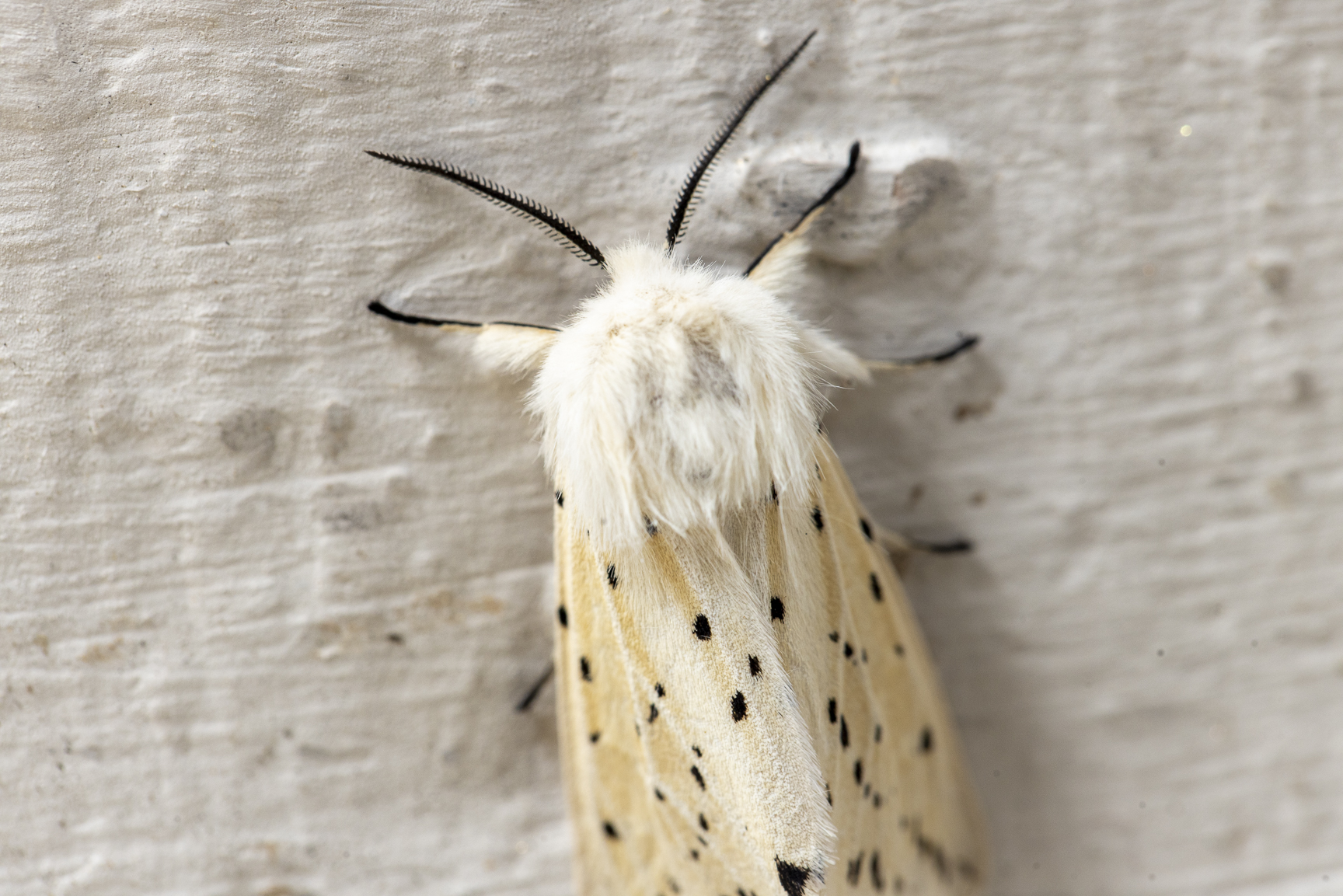
Take this photograph, which I showed to Maylin on Slack this morning, as I was sitting down at my desk to write:

Seconds later Maylin replied: “Gosh, that’s beautiful. Reminds me of 1920s Hollywood.”
I could see exactly what she meant. We were both looking at a moth, but our minds immediately conjured Ginger Rogers. . .

. . . all fabulous lines, all fur and feathers . . .

. . .striking an elegant pose.

Maylin had not seen this moth before, nor was she aware of the name by which it is familiarly known.
This is the moth with the Linnean classification of Spilosoma lubricipeda . . .

. . . but which, since the late eighteenth-century*, has had the vernacular English name of “ermine” moth . . .

. . .a moniker which immediately evokes the fur trims of heraldic robes and fashionable outfits . . .

From the eighteenth century to the twentieth.

Maylin’s specifically “1920s” associations with this palette of buff and black is spot on in so many ways.

It was the two-tone palette of Charles Worth’s fashionable fur cocoons . . .

. . .Jean Dunand coquille d’œuf vases

. . . and the Art Deco straw marquetry (marqueterie de paille) of Jean Michel Frank.

An ermine palette (happily for stoats) no longer carries the same associations of fashion or luxury in quite the same way as it might have done 100 years ago, but the distinctive colouring of the “ermine” moth can still immediately transport us from our desks on a rainy Thursday morning to that imaginary place of moonlight and love and romance, where Fred and Ginger are forever dancing.
What does the palette of the ermine moth suggest to you?

* See Thomas Marsham’s discussion of the ermine moth in Transactions of the Linnean Society (1791)
For a great book exploring the evocative nature of colour more generally, see Michel Pastoureau, The Colours of our Memories (2022)
With thanks to Maylin for prompting today’s colour study and to Tom, for evocative ermine moth photography


Leave a Reply