
This weekend, Tom and I saw A Matter of Life and Death at the Glasgow Film Theatre, as part of the BFI’s brilliant Powell and Pressburger season, which we are very much enjoying. Being generally obsessed with this film, and having written a wee bit about its innovative use of technicolor, it was wonderful to see it on the big screen, especially in this newly restored print, whose pearly clarity and gorgeous hues completely took my breath away.

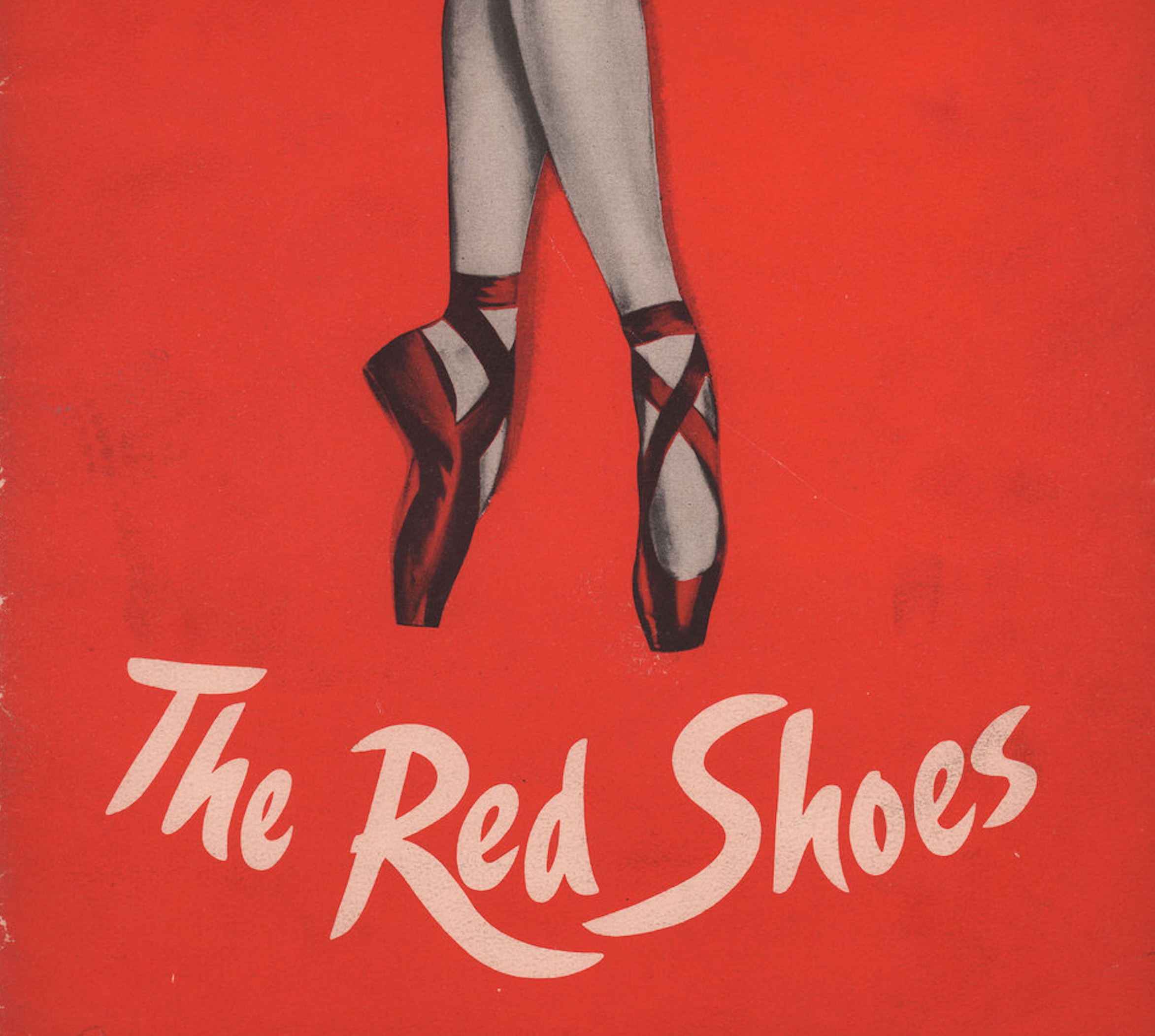
Revelling in the vivid on-screen colours of A Matter of Life and Death made me call to mind another Powell and Pressburger masterpiece, and the subject of today’s post, The Red Shoes (1948). This innovative film gathered several different creative genres together – fairy tale, ballet, theatre, narrative cinema – and combined them into a single glorious technicolor spectacle. The red shoes of the film’s title are its chromatic beating heart.

Red was a hue which really came into its own with technicolor. Not for nothing did MGM transform the silver shoes of Frank Baum’s original into Judy Garland’s iconic ruby slippers.

Charmed objects that the wicked witch yearns to possess, the ruby slippers also externalise Dorothy’s longing to return home, and act as a transporting mechanism between Kansas and Oz.

While Dorothy’s ruby slippers are obvious objects of desire and power, the red shoes coveted (and worn) by creatively-driven ballerina, Vicky Page (played by luminous, flame-haired Moira Shearer) are more symbolically ambivalent: objects of danger, enthralment, and self-destruction, as well as of desire.

To understand red’s ambivalence, we might return to its beginnings.

Michel Pastoureau describes red as “colour incarnate” – the hue of fire, blood and the body – birth and death and menstrual blood – as well as the first dyes and pigments.

In Chinese culture, red is auspicious and prestigious: the colour of good fortune and celebration.

. . .while many traditions, both east and west, associate red with pleasure, excess and sexuality – and with female sexuality in particular.

Red can be sweet or spicy, attractive or repellent. It can signify energy, enchantment, ambition, anger, pleasure, heat, violence, terror, madness, passion, transgression, revolution. . .

Red always lets us know its there. Red is a sign of warning.

Red is a super-saturated colour that tends to soak up human meaning. Red can be many things, but it can never be neutral.

In traditional fairy tales, red often acts as a premonition or pre-figuring of the violence with which the story ends.

In Hans Andersen’s original tale (from which the ballet within the Powell and Pressburger film is loosely adapted), the fulfilment of desire (in the wearing of the red shoes) ends with masochistic self-destruction (when the dancer finds she can’t stop dancing). The dance consumes the dancer, and the red shoes shift from being objects of desire to agents of self-destruction.

Powell and Pressburger’s film follows, to some extent, the familiar fairy-tale logic – Vicky’s red shoes are both eros and thanatos, desire and death – but the story (and its chromatic symbolism) is much more ambivalent, and certainly much less predictably moralistic

For Vicky’s red shoes are so many things . . .

her heart’s desire . . .

. . .and love’s denial . . .

rapture . . .

. . . and repulsion

. . . self-expression, self-possession . . .

. . . and the damaging control or containment of the self.

Perhaps most of all, Powell and Pressburger’s red shoes – captured so wonderfully by the Archers’ cinematographer, Jack Cardiff in glorious technicolor – vividly convey the tangible materiality of dance – the hard work that dance involves, the physical discipline of it, the exacting demands dance makes upon the mind and body of the dancer.

Power and desire, blood and the body, creative realisation or self-destruction, fetish or charmed object: the ambivalent allure of the red shoes has continued to fascinate creative women from Anne Sexton to Kate Bush.

Red can be many things – but it can never be neutral.
Further reading
Michel Pastoureau, Red: The History of a Colour (2017)
Nathalie Morris and Claire Smith, eds, The Cinema of Powell and Pressburger (BFI, 2023) (a highly recommended new book!)
Sarah Street, Colour Films in Britain: The Negotiation of Innovation 1900-1955 (2012)
Lesley Stern, The Scorsese Connection (1995) (an interesting and original reading, arguing that The Red Shoes and Raging Bull are essentially the same film – yes, really!)
You might also enjoy this interview with the brilliant and inspiring Thelma Shoonmaker (from Mark Kermode and Simon Mayo’s podcast )


Leave a Reply to Mary Cancel reply