It is almost time for Tom, myself, and the rest of the KDD team to take our winter break. I love watching (and re-watching) films over the festive season, and have many, many favourites, but among these are various titles which, for one reason or another, would probably be regarded as a little unusual. Have you watched Elf too many times? Does the mere thought of another encounter with Love Actually induce feelings of vague nausea? If you are tired of seasonal schmaltz and find yourself in the mood for something a little different, here are my top five recommendations:

Number 5: Tangerine (2015).
Directed by Sean Baker, this film about trans women sex workers seeking out a cheating pimp on Christmas Eve has, to my mind much more emotional intelligence, nuance and humanist melancholy than the director’s more recent and Oscar-winning Anora.

Number 4: Tokyo Godfathers (2003).
Melodrama meets animé in Satoshi Kon’s appealing story of three homeless misfits who find an abandoned baby on Christmas Eve. The film hits all the beats of a traditional holiday movie, but well-drawn unconventional characters and a series of small miracles makes the viewer reconsider what really constitutes a family, and the meanings of the festive season.

Number 3: Eclipse (1977)
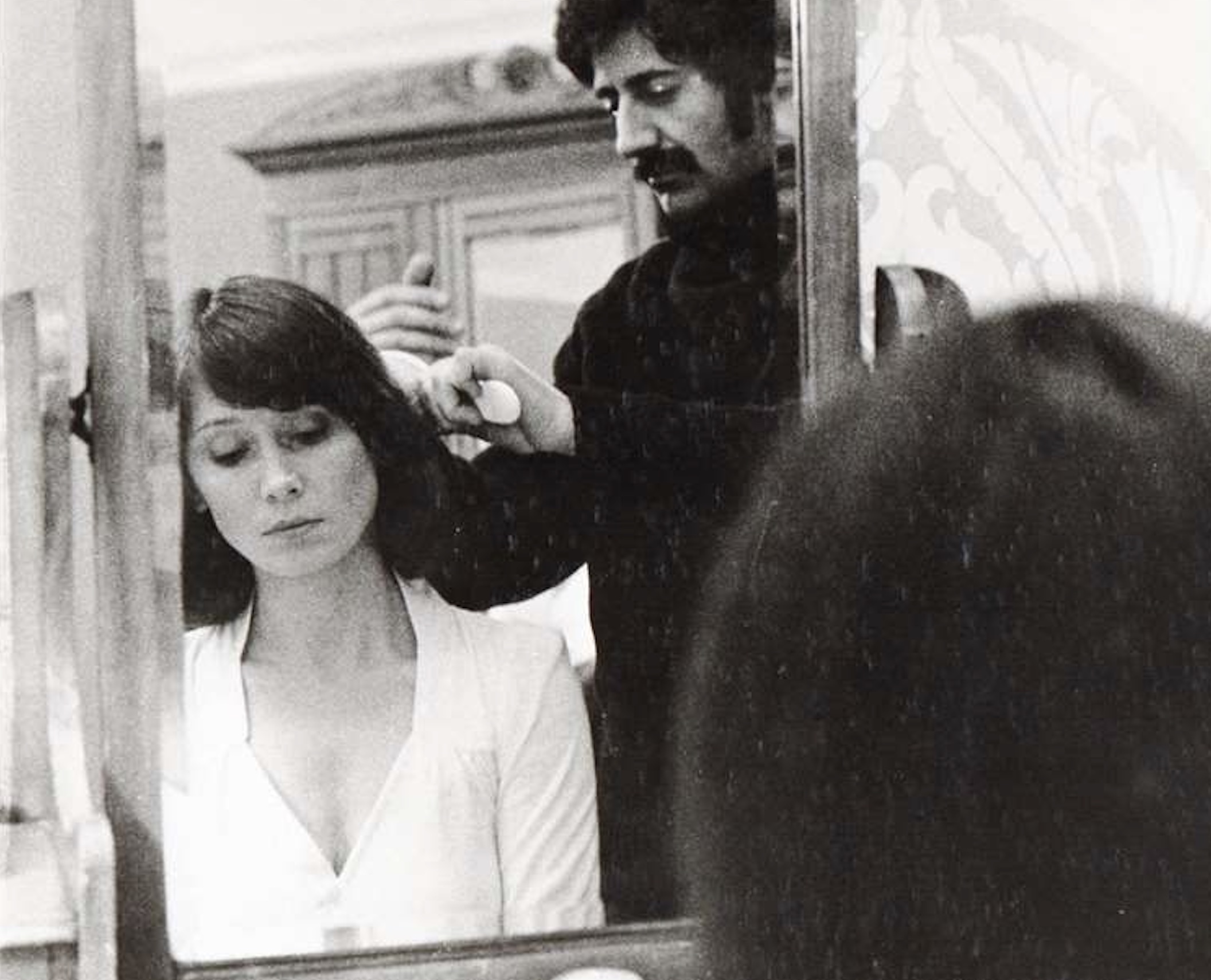
This British oddity, directed by Simon Perry, has recently been reissued by the BFI, apparently partly at the request of Tom Conti, who had not seen it since starring in it almost 50 years ago. Conti plays identical twin brothers, one of whom has perished in a rather unlikely boating “accident” during a lunar eclipse off Scotland’s north west coast.

In a psychological thriller set-up that will be familiar to anyone who has read Josephine Tey’s Brat Farrar (1949) or Daphne Du Maurier’s The Scapegoat (1957), Conti’s un-mustachioed twin visits his brother’s house for Christmas, in order to play unhappy festive families with the dead man’s wife and son.

This is a genuinely weird and often surprising film, with so much to recommend it, from the atmospheric 1970s electronic soundtrack and Conti’s attempts to cook and serve the worst Christmas dinner ever to the gin-swilling Gay Hamilton, perpetually giving Conti the side-eye while her sinister portrait of the dead husband / double observes proceedings from the cottage wall.

Eclipse also features excellent knitwear, including a pair of children’s gloves which may have had an influence on my recent design work.

Highly recommended. But not for cats.
Number 2: Comfort and Joy (1984)
Everyone loves Gregory’s Girl (1980) and Local Hero (1983) but in my experience far fewer people have watched Bill Forsyth’s wonderful “festive” film, set in 1980s Glasgow, Comfort and Joy (1984). Shaken by a pre-Christmas romantic break-up, local radio DJ Alan Bird (played by the excellent Bill Patterson) mooches about the city, searching for a sense of purpose.

Beyond him, a Glasgow without landmarks is glimpsed obliquely through the December fog. I love the way in this film that the city only ever reveals itself at a distance or in passing, and this sense of passing through – through a place, a moment, a mid-life crisis – is one of its defining features. There will be no Christmas miracle for bewildered Alan, but things take a curious turn when he crosses paths with the fabulously mohair-clad Clare Grogan, and finds himself implicated in Glasgow’s ice-cream wars.

One thing I love about Forsyth is the way his films capture the genuine strangeness of ordinary life, and here the surrealism of the everyday fuses with a December mood that is as sweetly melancholy as a glass of sherry. My deep fondness for Comfort and Joy is only increased by memories of my old next door neighbour, who worked as Forsyth’s construction manager on this and several of his other Scottish films. A wee gem.

Number 1: Die Hard (1988)
Come on, you can’t deny it – this film truly is a work of festive genius. But I did not know just how much Die Hard was missing from my December rituals and my life until I finally watched it with Tom a couple of years ago. I was mesmerised! Die Hard was exactly what I expected, and yet politically it was so much more. During my first watch, I honestly could not believe what I was seeing, and as the film’s third act took yet another crazy direction, I turned to Tom in wonder and said “but this is a film all about Neoliberal economic anxieties! Look! 1980s corporate excesses are being replayed as Vietnam!” Tom, who still regards Die Hard as the trashy action thriller it successfully masquerades as being, was totally unconvinced, but I then went away and read analyses by various afficionados who make very convincing arguments for John McClane as a stand-in for Ronald Reagan. If you think I’m taking my cultural materialist critique too far, please watch this account of making the film from Die Hard’s maverick director, John McTiernan, and then tell me that I’m wrong.

Yes, Die Hard relies on familiar Orientalist stereotypes in order to make its reactionary case for the United States’ 1980s deviation from the Good Ol’ American Way, and yes the film’s narrative logic is undeniably misogynistic (women’s troubling economic independence means that they might be flattered by a Rolex watch and the sexual advances of noxious J.D. Vance lookalikes into undermining the very cultural foundations of What Once Made America Great) but I defy you not to get caught up in its ridiculous festive energy, or fail to laugh out loud at the film’s desperate efforts to reassure you of John McClane’s unquestionable manliness in the scenes where Bruce Willis’s perspiring hairy chest addresses itself directly to Bonnie Bedalia’s inviting cleavage (Holly’s mighty Christmas Cleavage, and its power to restore America’s “bankrupt culture” is, after all, what John McClane is fighting for). Die Hard is the film that best encapsulates my theory that all American holiday movies are basically about the restoration of The Right Kind of Capitalism (I’m looking at you, It’s A Wonderful Life, with your two dollar bills happily getting it on in the safe of Jimmy Stewart’s Savings and Loan). Yippee Ki Ay, Motherfucker! I’m sure you can guess just how excited I am to see Bruce taking down a ludicrously-accented Alan Rickman at the Campbeltown Picture House next Friday. Tom will endure my enthusiasm with festive toleration.

Please do let me know about the films that you love to watch over the festive season — whether traditional or more “unusual” — in the comments. I’m really looking forward to some leisurely viewing over the next few weeks.


Leave a Reply to Andrea Ozment Cancel reply