nutz

There is no getting away from the fact that I’ve had a rough few days. Please try not to have a stroke, people: the long term health implications of it are really bloody annoying. Sometimes the process of recovery itself can add further problems to the myriad medical issues that follow a brain injury, and this has certainly been the case for me. This particular issue concerns the instability of my pelvis, and my general (in)ability to get about, and as well as being in quite a bit of pain this week I’ve been feeling rather angry and frustrated. Will this shit never leave me alone? Unfortunately, it probably won’t. The only thing for me to do is to properly face up to the fact that a stroke is, in effect, a chronic condition with which I am now living: however determined I am, my mobility is now going to be seriously compromised for the rest of my life, and I have to deal with that. Easier said than done, sometimes. I often find myself thinking of Patricia Neal and her hip replacements.

I’m not keen on myself when I’m maudlin, and I’m quite sure no one else is either, so I find myself with not too much to say today. Here are a couple of cheering things.

I love this so much I can’t stop knitting it. The yarn is the stuff I showed you recently and it is just. so. bloody. tasty. I am making some things from it which will be out in pattern form next month, so I will be able to show you the right side reasonably soon.

Tom baked hazelnut shortbread. When baking anything containing nutz, it is, of course, obligatory to sing several verses of the old Louis Jordan song, Nuts to You. At least it is round here:

“We’ve got walnuts, chestnuts – all the best nuts -
Every kind but donuts
Brazil nuts, peanuts, we will see nuts
Till we really go nuts.”

Where was I? Oh yes, Tom’s hazelnut shortbread. It is very good.

You will find the recipe on p. 948 of Nigel Slater’s Tender, vol 2, or below in an abbreviated variation, rendered without Nigel’s linguistic excesses (“large, unruly balls” being a notable feature of his original).

Butter 170g
golden caster sugar 100g
skinned hazelnuts 60g
ground almonds 40g
plain flour 200g
icing sugar for dusting

Preheat oven to 160c.

Cream butter and sugar together till fluffy.
Toast hazelnuts in a dry frying pan until golden, then pound with mixer or pestle & mortar until coarse.
Add the nuts & flour to the butter & sugar and stir until the mixture comes together.
Take a teaspoon, and divide mixture into twelve blobs.
Place on non-stick baking sheet and bake for about 25 mins, or until the biscuits have risen and begun to colour.
Remove from oven and leave to cool for 5 minutes, before lifting from the baking sheet and dusting with icing sugar.

Enjoy while still slightly warm, with a nice cup of tea.

friday


I’ve been out for a nice long ramble with Bruce. It was raining.

As long as I have a) a good waterproof and b) non-leaky boots, I rather like walking in the rain. There is nobody around. The world looks different. Everything smells good.


Bruce got to splash about in all sorts of wet stuff with complete impunity.

Almost as good as a long walk in the rain is coming in and drying off from a long walk in the rain . . . with a giant cup of tea . . .


. . .and a scone (bizarrely, my biscuit disaster seems to have kindled a baking phase).

Have a nice weekend, everyone!

domestic incidents


Tom was out cycling. However many mysterious gels and powders he consumes, he is always ravenous when he gets back. So I decided to “surprise” him with some tasty home baking.

I don’t bake very often.

Tom poetically described them as “little piles of cat sick”.

At least my peppers are doing well.

industry

A recent search among Tom’s brewing supplies discovered a bottle whose contents suggested mystery. We opened it, and it turned out that the bottle did not contain questionable mead at all, but was rather a Landlord clone, of at least two years vintage. It was clear as a bell and tasted delicious – evidently one can leave this stuff in its bottles for longer than one expects without fear of decomposition . . . or explosion.

The marvellous mystery ale has inspired a day of industry. A new brew is brewing. . .

. . . the Christmas cake is about to go in the oven. . .

. . . and I have ripped my fishy project back to the beginning, re-charted it, and started knitting it again. I woke up in the middle of the night and had an idea for its improvement that I just couldn’t shake. This is the way it goes sometimes. I am sure that the fishy thing will look better for the re-working, and find myself excited about it anew. And there was further fishy excitement this week . . .


(I apologise for the quality of this photograph, which was taken with my phone.)

This is the weir on the water of Leith close to where I live and you’ll just have to take my word for it that the white dot between the water and the bank is a heron. (Really, it is a heron.) I see this particular heron-buddy in the same spot every day, and often wonder if the pickings in that part of the water are rich. It turns out that the heron must be enjoying a seasonal feast, as, after some heavy rainfall the other day, I spotted several huge salmon leaping the weir to get upstream. It was curious to see this in the middle of the city, surrounded by old mill buildings and chimneys – the relics of Leith’s industrial past. I have been enjoying John Muir’s writing recently, and was reminded of his words about nature’s restlessness and resilience. It seemed good to think of life renewing itself in this dark, declining part of the year.

happy tortoise and hare day!

The tortoise and the hare is finished! I am pleased with it!

I am not ashamed to admit that I had foolish ideas about an appropriate photo location, for which I blame a poster I saw a while ago advertising the LMS railway. The poster was from the 1920s, and like many of this era, it got its message about the benefits of travel across with the image of an energetic young woman enjoying a healthsome, outdoor sporting activity – in this case golf. The setting was the Fylde coast, and a culotte-clad golfer was dramatically framed against the dunes, swinging her club and staring into the middle distance. The caption read “Lytham St Annes for Sea Breezes and Sunshine.” (I’d show it to you, but it doesn’t appear to be online…this companion piece gives you a flavour of it, though). I was to be the windswept golfer, so I donned my culottes (which Tom refers to as the loon pants for perhaps obvious reasons) and we set out to find a golf course.

I was of course forgetting that golf courses are private spaces – indeed, to me golf represents a wholescale privatisation of the landscape anachronistic in a country with progressive outdoor access legislation – but clearly on this occasion politics had to be sacrificed to fashion. Golf courses are also (apparently) dangerous places, due to the associated hazards of flying golf balls and marauding golf buddies. With some trepidation, we advanced beyond the margins of public access and attempted to find a good location. I did not possess clubs or other paraphernalia; the golf buddies were circling like vultures, and a lolloping woman with a leg brace is a conspicuous figure on the green. This was a totally shite idea for a photoshoot!

The flag is there to remind you that I am on a golf course and I am staring out to sea (perhaps trying to locate my lost marbles). The whole effect is more Just William than Jordan Baker, but this interesting shot of my armpit does serve to illustrate what you are all no doubt dying to know: how did I incorporate shaping into the colourwork? ‘Traditional’ fairisle sweaters are not shaped to the bust and waist, and more modern, closely-fitting designs often get round this by allowing the shaping to interrupt the pattern (with a greater or lesser degree of success). I considered several options, none of which were totally acceptable to me: vigorous blocking; the familiar trick of working with smaller or larger needles; having half a tortoise or hare traveling up my torso; or making the sweater fit more loosely and squarely ie- not bothering with shaping at all. Waist decreases were easily integrated into the deep rib at the bottom of the sweater, but what about increasing for the bust? In the end, I realised that I could continue working peerie bands around the sweater, as long as my increases were added in multiples of 5, and I wove in the colours of the hares and tortoises along the back of the work (this is the only weaving I did). This has allowed for a difference of several inches between the measurements of the waist and chest, and the peerie band fools the eye (to a certain extent) into seeing the pattern moving continuously around the torso. In any case, as one does not usually throw armpit-displaying shapes in public, the way the increases are worked is not all that obvious anyway.

Short row set-in sleeves are my new favourite thing: I was put off them a little when I tried Wendy Bernard’s method of picking-up-the-stitches-as-I-went with a kids sweater I was working on a while ago – I made a bit of a pigs ear of it – but really much prefer doing it the way that Barbara Walker recommends: cutting the steek, picking up stitches all around the sleeve cap, and working short rows to the underarms (I used the Carol Sunday short-row method). O, the joy of setting in a sleeve without seams!

I love the triple vikkel braid that separates the ribbing from the colourwork. What I had in mind here was the decorative belt on a ’30s swimsuit, and it does give the sweater that slightly drop-waisted feel. The braids are rather time-consuming to work over a sweaters-worth of stitches, but definitely worth it.

Strangely, the pictures that we took seemed to be much better once we had escaped from golf-world . . .
Here’s a final shot of the whole thing.

A pattern shouldn’t be too long in coming; I’ve planned everything about this design really carefully, so hopefully there will be no unknowns. I also had the idea of writing a companion design for tortoise and hare fingerless gloves / armwarmers to be included with the sweater pattern (these might be worked as a sort of tester swatch or sampler for those unfamiliar with colourwork techniques like the vikkel braids, and could be rather fun).
Here are the project specs in the meantime:

Design: the Tortoise and the Hare
By me! Pattern forthcoming
Yarn: 4 shades of Blacker designs Shetland 4 ply; Katmogit, moorit, white and dark. This is an exceptionally soft and tasty Shetland, which I know will wear fantastically well. I used 180g /675 yards of the katmogit, almost a whole 50g ball of each of the moorit and dark; and around 30g of white.
Needles. 2.75 circs for rib, and on 3mm for body.
Ravelled here

In other news, it was my birthday yesterday (huzzah!) and there were macaro(o)ns. Tom used the Humble Pie recipe a few of you recommended and attempted three varieties: almond and rosewater; pistachio and vanilla; and hazelnut and orange. I have to say that there was a lot of cursing coming from the kitchen the night before last: Tom felt the recipe was a little too sweet and too eggy and removing the macawotsits from the greaseproof paper proved to be a total nightmare. The almond ones were the first batch, and he felt that he overbeat the egg whites, and overcooked them to boot. But the pistachio and hazelnut varieties turned out extremely well, even though Tom was not at all pleased with what he felt was their rather rustic appearance. Indeed, he seems to have gone off the idea of fiddly pattiserie altogether, since his first response to making the macaro(ons) was “I’d rather bake a big ol’ cake and cut you a giant slice.”

From my perspective, however, they were damn tasty – particularly the pistachio ones. And I mostly had a great birthday, but I have to be honest and say that the combination of excitement and exhaustion proved to be a little toxic: I spent the early part of the morning motoring around the flat with the hill-walking poles that Tom had got for me, not thinking about what the effects of learning a new skill of reciprocal bodily co-ordination, combined with putting a lot of unexpected weight through my left arm, would be. I stupidly wore myself out, collapsed for the rest of the day, and then had to sleep for a few hours before I could muster up enough energy to nip out to North Berwick for Tortoise and Hare photography. After that, we bought a fish supper and sat on the sea wall to eat it, looking out at The Bass Rock almost luminously white with gannets – a lovely evening, but an at times frustrating day.

experiments

jam

#1. Jam. I blame Sarah. She brought a jar of her homemade jam round for lunch, and it was so damn fine I had to try my hand. These jars combine the last of our allotment raspberries with some extra from the farmer’s market. Jamtastic! It set, and everything. We have already guzzled our way through one of the six jars.

baking

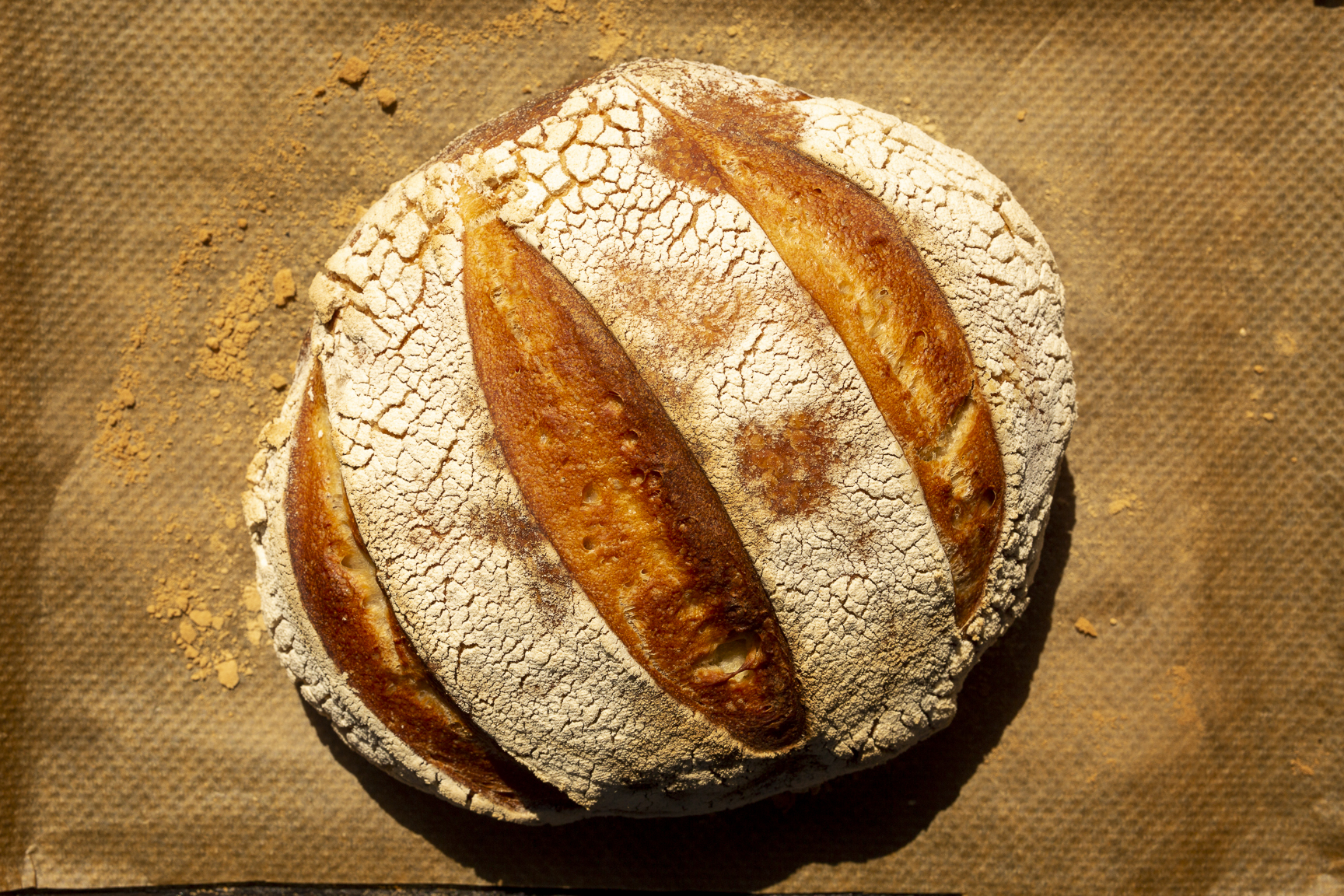
#2. Baking. I blame Felix. She turned up here a few weeks ago with a jar full of sourdough starter, and her characteristic culinary enthusiasm. Since, then, I’ve not been able to stop baking. I’ve made several loaves, flatbread, a victoria sandwich, scones, a marmalade cake, and, um, buns . . . with varying degrees of success. The less said about these buns, the better.

ysolda

#3. Technique. I am researching knitting accessories, and since acquiring one of these am keen to discover exactly what using it involves. As my own experiments have been rather clumsy, I defer to someone with superlative expertise, who is here pictured mastering the makkin, and knitting with two strands in the right hand, Shetland style.

peerieatproaig

#4. Colour. I am completely obsessed with colourwork, and blame the current depth of my obsession on Alice Starmore’s Hebridean 2ply, with which I knit this experimental hat a few weeks ago. My experiment was not entirely successful, but it has certainly whet my appetite for further experimental forays with this yarn. To make the hat, I simply selected four colours that I liked, measured my head and my gauge swatch, picked out a few 10 stitch peerie patterns, and cast on. (I didn’t cast on in icord — but found that I had to add some later — I just couldn’t stop myself . . .). Now, while the palette I chose is perhaps too muted to be successful, and while the crown shaping is certainly not quite right, I really learnt a lot when knitting this hat: about colour behaviour and placement, and about the relationship between colour and pattern. I also finished knitting it with a confirmed sense of Starmore’s genius. Her colourways really are amazing. For example, ‘pebble beach’ – the pale colour that I tried to make pop out of the centre of the first few sets of peeries — is a truly gorgeous mercurial shade. It looks greenish here, but its colour dominance shifts dramatically depending on its placement. I’ve tried it in other combinations since, and against different colours it can look fawn or mauve, gold or pink (much like the pebble beach behind me, in fact). These shifting tones are apparently produced by a blend of more than thirty shades. The funny thing about this hat is that, despite the fact that it is a sort of large swatch with several design deficiencies, I have developed a deep fondness for it. I brought it to Islay, and I barely took it off my head. I think the precise and thoughtful relationship of Starmore’s palete to the Hebridean landscape has a lot to do with my affection. Anyway, my peerie-sampler-hat-experiment is ravelled here, and the colours I used were capercaillie, fulmar, pebble beach, and driftwood.

I am now knitting experimentally with an allotment-inspired colour pallette. I also find Felix’s wise words about knitted vegetables very inspiring. More soon!

as you were

It feels as if things are returning to ‘normal’. The physios are very pleased with Tom’s progress. He must now punish the healed-up hand with constant exercise to regain maximum mobility, and is also allowed to do everyday things again. Today we both went for a run in the hills. Time to fire up my trusty walshes and throw myself off a summit into a howling gale — hurrah! I have also (happily) been relieved from cooking duty. This means I now have the pleasure of devouring things like this again:

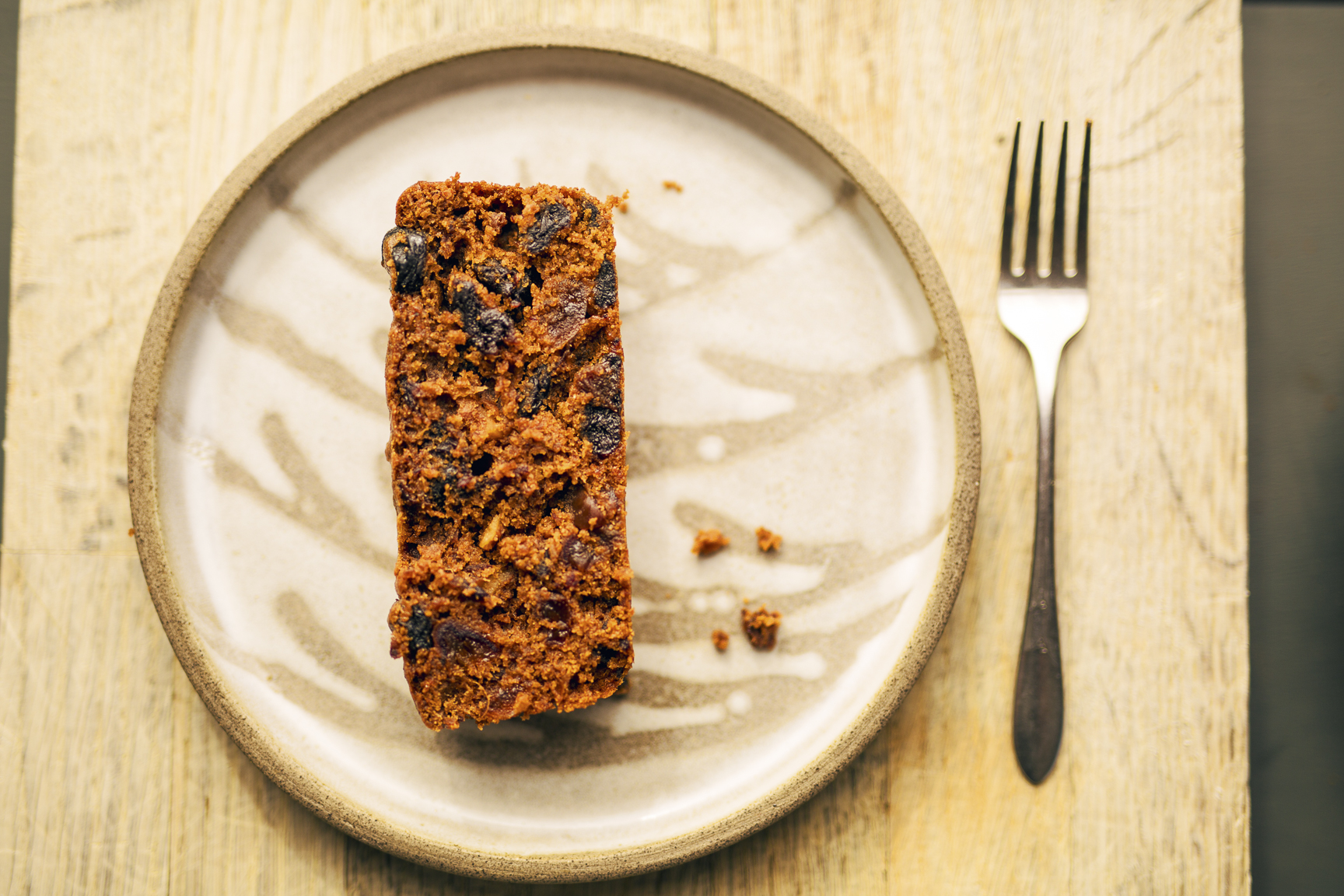
Tom’s pear and ginger cake. Insanely good and one of my favourite things to eat ever. This version had the added bonus of fresh eggs from Sarah’s hens (thanks, Sarah). Recipe from Jane Grigson’s fruit book.

Now the usual household division of labour is reinstated, theres also a bit more time for completing old projects. . .

. . .and exploring the potential of some new ones:

Mostly, though, I’m just so thankful that Tom is able to use his hand again — with not much mobility and still less feeling, but he can use it. The transformation from bloodied stump-thing to working appendage has really been remarkable and has filled me with a stupid sense of wonder at what the human body (and some very good surgeons) can do. I did sort of want to show you before and after shots, but was told that this was far too gruesome. Anyway, thanks once again for all your good wishes and encouraging words. Those of you who emailed us with positive things to say about healed injuries and physiotherapy were (of course) absolutely right. Thanks! x

always a fresh egg a’piece

Let me start with a disclaimer. I do not work for Yorkshire Tea. I do not know anyone who works for Yorkshire Tea. I apologise for any unseemly brand promotion. But I heart Yorkshire Tea.

There are many anachronistic elements to my Yorkshire Tea obsession. The first is that I originally hail from Lancashire. In the past, my brand loyalty has been tinged with a nagging sense of regional guilt. When, a couple of years ago, I heard that Lancashire had launched its own brand of tea (wars-of-the-Roses, beverage style) I was fully prepared to switch county allegiances. I could not find any Lancashire Tea in Scotland, so I insisted that my Ma (conveniently placed in Rochdale) nip straight out to get me a motherload. But what disappointment! I really wanted to like it, but I just didn’t. It may have been blended in Newton-le-Willows. The packet might well have displayed a map of Lancashire’s ancient county boundaries. But it lacked both strength and maltiness. Yorkshire Tea it was not.

Another reason to be circumspect about Yorkshire Tea is its calculated and fantastical “like tea used to be” advertising. You know the kind of thing: All Creatures Great and Small, sheep, cricket, dry-stone walls, steam trains cutting through rolling limestone landscapes and always a fresh egg a’piece. Yes, this immortal phrase was actually uttered in a Yorkshire Tea TV advert and for me (and some other people I know) has long been the source of much tea-associated hysteria.

But the thing is, however much I laugh at the fresh eggs and the heritage fantasy, I also find all this stuff secretly appealing. I must do. For how else do you explain that I now have, in my possession, every single item in the Yorkshire Tea gift range?


Tea shaped dunking biscuits. Ah me.

To acquire these wondrous items you have to collect Yorkshire Tea Tokens. To collect the tokens, you have to drink an awful lot of tea. I find a singular pleasure in both activities.

Seriously, how can you argue with a jolly orange teapot, yours for only 36 tokens and a small postage fee? The points-collecting aspect of Yorkshire Tea recalls, for me, the heady days of youth, when packs of cigarettes came with similar tokens. Back in this simple, uncomplicated era you could smoke your way through the ‘gratis’ outdoor equipment catalogue, and no one saw any contradiction in exchanging guaranteed emphysema for a podometer, or a small family tent. In this former life, Tom smoked enough B&H to acquire many ‘gratis’ items, including a decent sleeping bag. Tea has now happily replaced nicotine in both token and addiction-related matters.

Anyway, the latest additions to my Yorkshire Tea collection arrived in the post this morning:

Joy! My Yorkshire Tea tea-towel and mug can now join my Yorkshire tea apron, tea caddy, teapot, milk jug . . . you get the picture. On the latest token collecting card, they asked for ideas for other gifts to add to their range. I had several suggestions.

The best thing about Yorkshire Tea is, of course, the tea. It is tasty, refreshing, strong and black. With the addition of milk it turns a pleasing coppery-orange colour. You don’t have to eat a fresh egg every time you drink a cup, but I do have a suggestion for something containing fresh eggs that makes an excellent accompaniment:


Border Tart!

Here, in a first for this blog, is a recipe — a recipe by me and baked by me. Excitement!

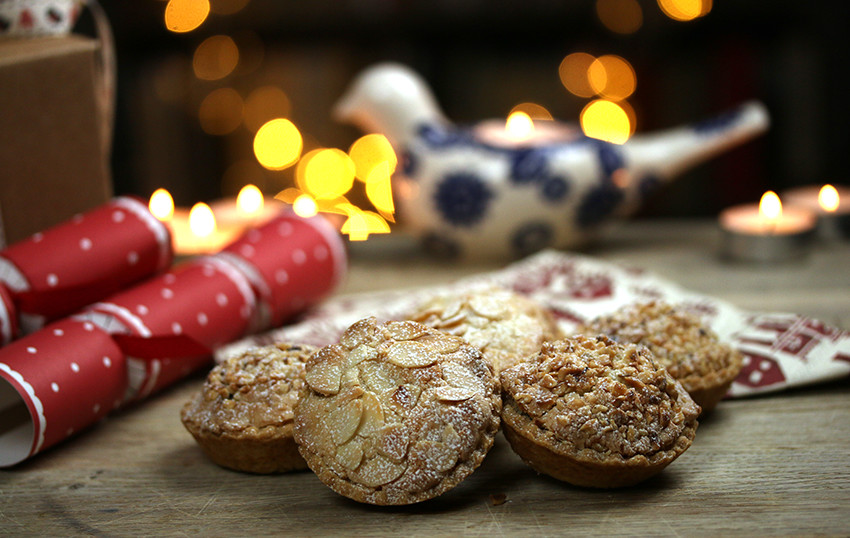
Border Tarts are another obsession of mine, and I’ve sampled many varieties both in Scotland and Northumberland. My favourite is the buttery, almondy confection known as an Ecclefechan tart. I’ve had so many good Ecclefechan tarts that I insisted we take a trip there — unfortunately we found the village singularly lacking in baked goods, which was (for me) rather sad. So here is my version of an Ecclefechan tart based on those I’ve enjoyed. Now, I am no supercook, or anything, but I can make decent pastry. And can I just say that I am as about as proud of these tarts as of anything I’ve made? And that, containing your recommended annual allowance of butter, they really are berloody good?

For the pastry:
200g plain flour
120g butter from the fridge
2 tbsp golden caster sugar
1 egg yoke

for the filling:
100g golden caster sugar
100g butter
1 egg, beaten
50 g ground almonds
50 g glace cherries, chopped
handful flaked almonds
handful dried fruit (currants, raisins, cranberries)
half a grated nutmeg

Preheat oven to 375f / 190c/ gas mark 5
Make sweet shortcrust pastry:
rub butter into flour until the mixture resembles breadcrumbs, stir in the sugar and add the egg yoke. Combine to make smooth paste, adding a couple of tbsps water if the mixture is too dry. Stick pastry in the fridge to rest for half an hour.

Make filling:
In a pan over a low heat, melt the butter and sugar together, stir until melted. Take off the heat and add the dried fruit and everything else except the egg. Allow mixture to cool for a minute or two, then stir in the egg.
Roll out the pastry, cut into small rounds, and line a bun tin. Put a generous scoop of the mixture into each pastry case, and stick it in the oven for 15-20 minutes, until the mixture has risen and is turning golden brown. Cool on a wire rack and eat, marvelling at the flaky buttery pastry and sheer almondy nutmegy wonderment of the tart.
Makes 24.

We are taking a much-needed break and are off this weekend, not to climb mountains or walk many miles, unfortunately, but to sit in the sun, which will at least be relaxing, and safe for Tom’s arm. See you in a couple of weeks.

unheppy

I am often struck by the liveliness and diversity of the world of contemporary domestic crafts. In very particular ways, the intermewebnet really has informally transformed the domestic into the public sphere. From their kitchens and computers, women and men all over the world are exchanging knowledge about an enormous range of practical issues and debates, sharing their messes and mistakes as much as their proud creations. These people are asking questions about consumer and gender politics, about the history of design, about process and about material practice. They are making things for beauty and for use: benches, pies, hats, yarn, toys, books, tools. Some people are examining the idea of domesticity and transforming it into art, while many others are finding it the basis of successful businesses.

With all this infinite variety, how is that the two least interesting faces of contemporary domesticity have suddenly become its public representatives? The two faces I refer to are the domestics-in-drag who need no introduction here, and those less pernicious, but no less prevalent ‘ironic’ crafters who read anarchy in every crocheted granny-square. In an article by Viv Groskop in last week’s Guardian, the conservative and ironic faces of the ‘new domesticity’ are held up as twin envoys of what is regarded by many (non-crafting) feminists as a terribly regressive trend. Apparently, both Jane Brocket and the Great Cake Escape are indicative of a ‘return’ to the pre-feminist 1950s, that simple time of embroidered table linen and hourglass silhouettes, when the clock struck four, and everything stopped for tea. According to Groskop, the activities of both conservative and ironic crafters reinforce rather than question traditional domestic ideologies, prompting the rather pointless query: “can domesticity ever be subversive?”


Now, I’m not going to have a go at the Great Cake Escape. At least these women are energetically camp and entirely self-aware. Unlike many so-called anarchic crafters, their irony seems less cynical marketing than witty interrogation—a stage toward something that might turn out to be more interesting. And (perhaps unwittingly) the juxtaposition of ironic with conservative crafters in Groskop’s article does reveal something more intriguing about them both than either are in isolation. Brocket is quoted saying that “anything which is very personal and behind closed doors and pleasurable to women is subversive these days.” Here, she neatly captures what was always really at the core of the middle-class English domesticity she celebrates and perpetuates: that is, the dark heart of eccentricity and taboo beating beneath David Lean’s “heppy” exterior. What I am getting at here is just how close net curtains are to fetish-wear, and anyone who has seen Patrick Keiller’s superb exposition of petit-bourgeois Englishness in Robinson in Space will know exactly what I mean.


Brief Encounter. Heppily unheppy.

But despite her incidental disclosure of the obvious proximity of pinny-porn to bourgeois deviance, there are several problems with Groskop’s article. The main one is that she hasn’t done enough research. She just trots out banal generalities about how baking and sewing are stereotypically ‘feminine’ without actually looking at who participates in those activities, examining how they can be empowering, transformative, critical and creative things, or looking at how sewers or bakers of either sex who share and circulate their knowledge can thereby find new means of social and political engagement. Groskop’s notion of domesticity is incredibly, ludicrously limited: for her, it just equates to cupcakes and repression. But if she had just looked underneath the frilly pinafore—ironic, conservative or otherwise—she would have found a whole world of witty, critical, talented, and engaged domestic crafters just getting on with their thing without congratulating themselves on how bloody ‘heppy’ they are the whole time. As one smart baking friend of mine put it “the creativity is in the recipe and the labour, not in the fact that you scatter dolly mixtures on top”*. While Groskop concerns herself with those dolly mixtures, the rest of us will carry on engaging with that labour, and that creativity.

*thanks, Clare B.

Follow

Get every new post delivered to your Inbox.

Join 3,968 other followers