Rowan and me

feltedtweed

Some time in 2005, I was walking through the Edinburgh branch of John Lewis when my eye was caught by the display of Rowan yarns and samples. The gorgeous colours of the yarns and the beautiful styling and photography of the pattern books and magazines really grabbed my attention. On the spot, I decided to start knitting again, and picked up several balls of Big Wool in, if I remember rightly, the ‘tomato’ shade. The first thing I turned out was a gigantic tomato-coloured moss-stitch wrap on 10mm needles, and since then I have not looked back. What I’m saying is that it was Rowan’s yarns, designs, and photography — their distinctive and immediately recognisable aesthetic — that inspired me to take up my needles. I am sure that many knitters (and designers) have a similar tale to tell.

mineral

I have been writing features for the Rowan Magazine since 2009, and each one has been a pleasure to produce. Marie Wallin always provides suggestive and inspiring editorial briefs; the generous word length allows one to properly get one’s teeth into a topic; and it is genuinely thrilling to see one’s words and photographs laid out in such a well-produced and seriously beautiful magazine. Research for the fine lace feature I wrote for Magazine 50 (A/W, 2011) took me to Shetland — the first of many trips, and, for me, the beginning of another journey.

cinnamon

Although I have worked with Rowan for almost four years, I have never met Marie or the rest of the team. Yesterday I finally had the opportunity to do so, and popped down to Yorkshire to visit Rowan’s Holmfirth HQ.

damask

I had a lovely day. It was both fascinating and inspiring to see behind the scenes, to gain an insight into the complexities of the design and production process from start to finish, and to catch a glimpse (and squoosh) of what knitters will be treated to in future seasons. It was also lovely to put faces to design-room names, and to have the opportunity to chat about future projects in person.

watery

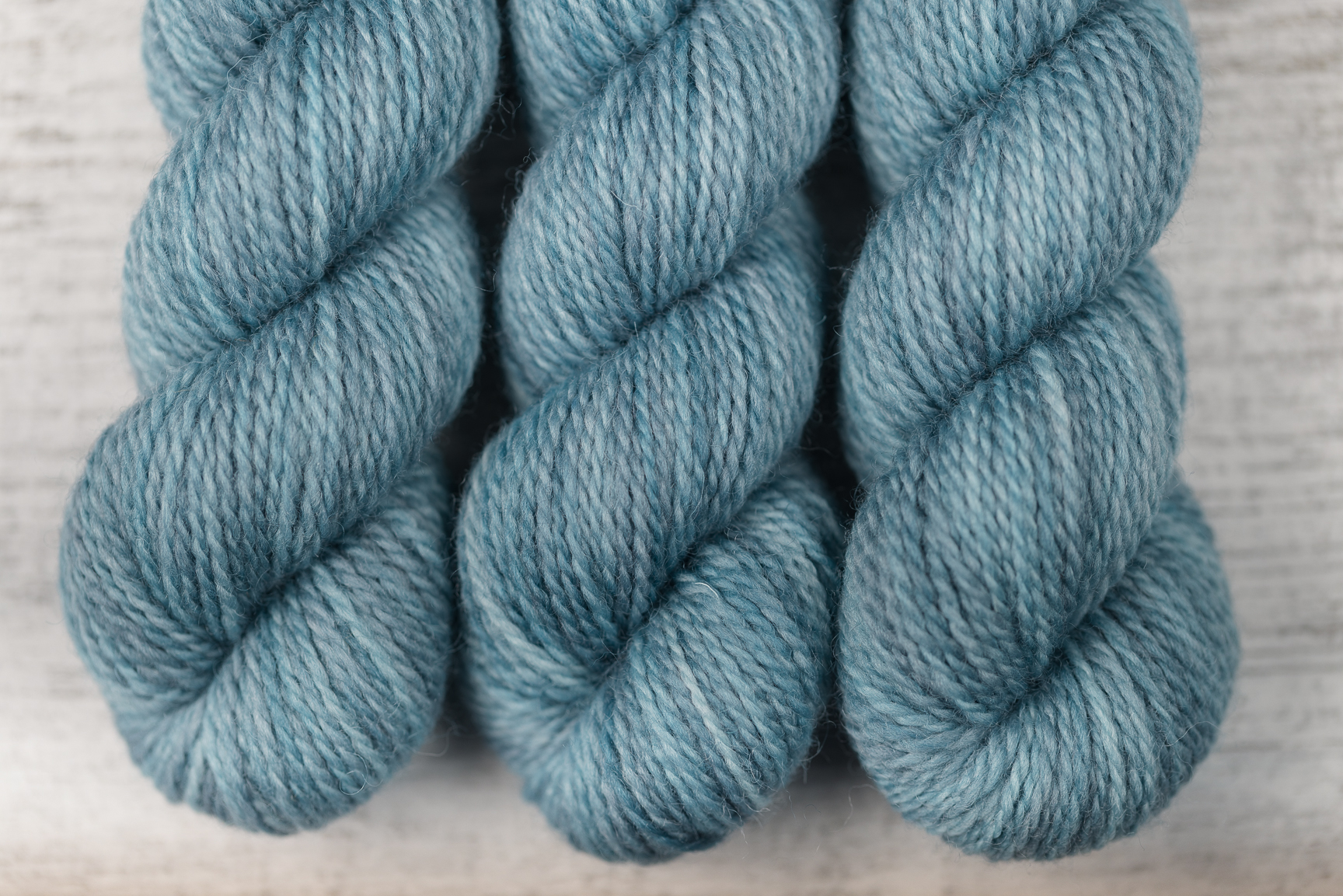
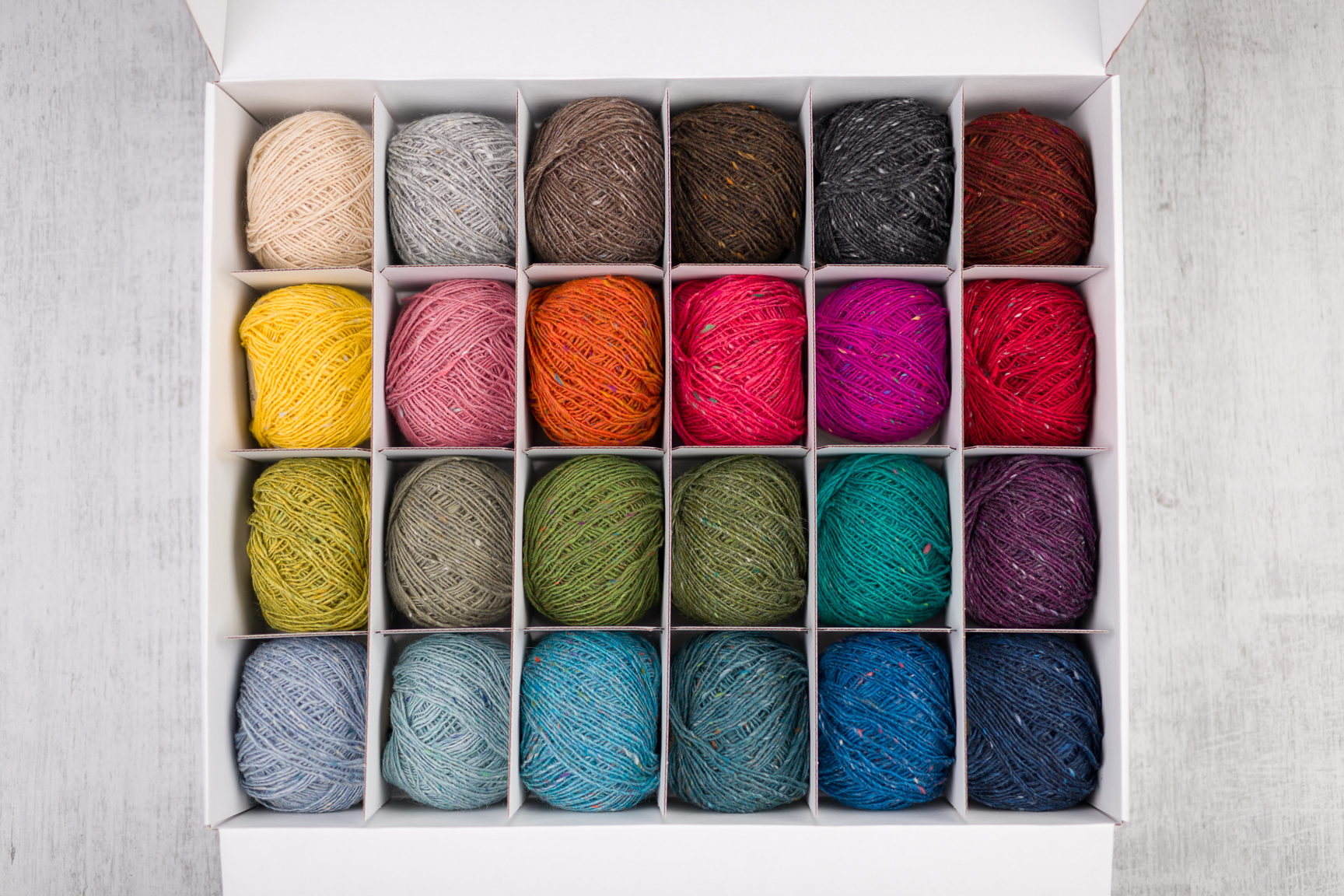
As these photographs will suggest, it was one of those incredibly busy sorts of days when there wasn’t an opportunity to make use of my camera — but these tasty balls of Felted Tweed may give you some indication of various things-in-process. All I’ll say right now is watch this space!

pine

Thankyou, Marie, David, Kate and the rest of the Rowan team for a wonderful introduction to the mill!

mr porky’s thought for the day

whorl

Yesterday was the third anniversary of my stroke. It is not an anniversary I want to ‘keep’ in any way, but I would be lying if I said it didn’t occasion in me a little melancholy and grief.

berries

Bruce and me have been out walking.

bruce

Outside things are starting to grow.

growth

And Bruce found something that really interested him.

mrporky

Really, it is just another, ordinary, February day.

thyme and taleggio scones

taleggio

Neither Tom or I are fond of food shopping, yet for some unknown reason we have never ordered our supplies online using one of the many delivery services now available. I finally tried this the other day, and of course made the mistake of failing to adjust the default units under which some items are measured. This rookie error resulted in the delivery of a kilo of taleggio cheese. I required just 100g to make a tart, and was now in possession of 10 times more than the recipe required. . . . Tom had a good laugh, and Bruce kindly offered to help out by devouring the excess, but, I reminded him (as I often have to) that dogs don’t eat cheese.

Unfortunately, taleggio is a substance with limited uses, and not really the sort of cheese you can just chow down on wholesale — it is quite strong and salty and very squashy. What to do?

cutter

Well, I just made taleggio scones for lunch, and they turned out so well that I thought I’d share the recipe!

scone

cheesy

There are a few key things to remember when making these:

1) stick the taleggio in the freezer for half an hour so that it hardens up
2) cut the taleggio into small pieces
3) do not work the scone dough in any way. Just bring it together and plonk it down on your floured surface.

Thyme and Taleggio Scones

(Makes 6 or 7 large scones)
6oz / 170g self raising flour
2oz / 56 g butter
3.5 oz / 100g taleggio
ground black pepper
sprig of thyme
5floz / 150 ml buttermilk

Put taleggio in freezer for 30 mins
Preheat oven to 180c / 350f / gas mark 4.

Rub the butter into the flour until the mixture resembles fine breadcrumbs.
Add the thyme leaves and the ground black pepper.
Take the taleggio out of the freezer and cut into small cubes. Using your hand, mix it lightly into the breadcrumb mixture.
Add the buttermilk, and, using a butter knife, stir the mixture gently until it starts to come together.
Bring the mixture together carefully with your hands into a rough dough. DO NOT KNEAD, OR OTHERWISE WORK THE DOUGH!
Place dough on floured surface and lightly press to 1.5 in thick.
Cut out scones with pastry cutter.
Place on floured baking tray and bake at centre of oven for 15 mins, or until golden.
Eat warm.

nom

Well, that’s 100g of taleggio down, only 900g to go . . . .

A Legacy of Shetland Lace

cover

I encountered many knitting books in 2012, but this was my favourite by far. Unlike so many books that have recently been written about Shetland, and Shetland knitting (my own included) this one has been produced by Shetlanders themselves. And not just by any Shetlanders. I don’t think it is going too far to say that the group of women behind this book are among the best knitters in the world. Their work is certainly the very finest that Britain has to offer. In this wonderful tome, key members of The Shetland Guild of Spinners, Knitters, Weavers and Dyers share their knowledge of the old traditions and contemporary practice of Shetland fine lace knitting. It is a timely publication. I have had cause to complain here several times about the misleading rubbish that is often peddled under the name of knitting ‘history’ and, unfortunately, Shetland textile traditions have suffered more than most in this regard — partly due to bias and poor scholarship, and partly too because Shetland’s knitter-designers tend to focus their talents on their needles rather than on the printed page. But here, we see the beautiful work, hear the articulate voices, and are able to work from the stunning patterns of Shetland’s wonderful knitter-designers. In so many ways, this book is their gift to the rest of us, and a very welcome gift it is too.

shells
(Shelley Scarf, designed by Lauretta Robertson)

The book includes a balanced collection of 21 designs. These range from familiar and simple Shetland openwork patterns (such as those that appear on Zena Thomson’s borders-in Traditional Hap, or Lauretta Robertson’s Shelley Scarf) to dazzling showcases of the finest of fine Shetland lace (such as Susan Johnson’s breathtaking Chapelside Stole, or Mary Kay’s St Ringan’s Scarf). There are also a couple of lovely lace garments to knit. No-one designs a yoked sweater better than Hazel Tindall, and her Gairdins Top is a very fine example. I also found myself drawn to Lauretta Robertson’s Laureya Cardigan , with its neat and pleasingly structural allover stitch pattern.

laureya
(Detail of Lauretta Robertson’s Laureya Cardigan )

Photographing fine lace can be very tricky, and Dave Donaldson has done a great job here. Most of the designs have been carefully pictured on blank, dark backgrounds. Close-ups help the reader / knitter to understand the rhythm of the designs, and provide useful visual cues to the accompanying charts.

vaga
(Close up of edging of Zena Thomson’s Vaga Scarf).

The charts are large and well laid out, and the patterns clearly written and explained.

One aspect of Shetland knitting that non-Shetlanders are often bamboozled by is its basic equipment. How are long wires and a makkin belt really used? What exactly is a woolly board? One of the many lovely things about this book is that the women involved in it have taken time to illustrate and explain these mystifying objects . . .

gilda
(The beginnings of Zena Thomson’s Gilda Scarf pictured with a makkin belt)

raepinstring
(lace tethered to the belt with a ‘raepin string’ to create tension )

Included here are also instructions for different methods of blocking and stretching (careful finishing really is crucial in all kinds of Shetland knitting), and there’s also a useful glossary of Shetland knitting terms unfamiliar to most of us. If you don’t know what “wrang loops” are or what it means to “spret” your knitting, here is the place to find out.

kemp

In amongst the designs and patterns, you’ll also find informative and witty anecdotes, together with interesting explanations of other knitting-associated dialect terms, all of which lends the book a distinctive Shetland flavour.

There are many things to love and admire about this book, but one of its most enjoyable aspects for me was reading the brief biographies of each designer. All of these women are truly amazing award-winning knitters, but I know from having met several of them that they can also be modest to the point of total silence about their considerable talents. Through their short biographies, we learn about what knitting has meant to them, about their own aesthetic tastes and predilections, and much more generally about a community in which lace knitting developed its own particular practices and economy, and played (and indeed continues to play) a crucial role in the lives of many women. Shetland knitters should be proud of their legacy, and it is wonderful to see that pride evidenced — albeit quietly — in the hopes that each designer expresses here for the book to which they have contributed. Winne Balfour hopes “that this book may encourage young knitters to take an interest in and enjoy learning, developing and continuing the skills of the legacy we have been left.” Zena Thomson hopes “that the clear patterns and photographs in this book will help people to try out patterns they might otherwise not have tried.” Pearl Johnson “is very glad that this book has been produced by folk living and knitting in Shetland and hopes that it will raise more awareness of Shetland traditional knitting,” and Susan Johnson “hopes this book reaches everyone interested in Shetland, Shetland lace and knitting, and that they receive and appreciate the spirit of quiet enjoyment that produced it.” That quiet enjoyment is evident on every single page of this great book, which should have pride of place on every knitterly bookshelf.

Shetland Guild of Spinners, Knitters, Weavers and Dyers, A Legacy of Shetland Lace (Lerwick: Shetland Times LTD, 2012). ISBN 978-1-904746-76-8

*You can buy A Legacy of Shetland Lace directly through the Shetland Times Bookshop or from Jamieson and Smith.

*And did you know that the Shetland Guild of Spinnners, Knitters, Weavers and Dyers have their own Ravelry Group?

Fun in Frome

gables

Did I mention that I really love my work? This week work took me to Frome — a beautiful small town in a part of Somerset which I have never visited. I was there to see Jen . . .

jen

. . . and also got to hang out with Jim (the inimitable Veuf Tricot) and Scooter. The latter is a very smart feline — far too smart to injure his dignity posing for photographs.

scooter

Jen and I worked (and plotted) really hard, and then then took an afternoon off to potter around town. I’m really glad we did, as Frome is a place that seems to demand pottering.

Everywhere you look, there are inviting windows to peer into. . .

window

tea

And things to look at . . .

dogsbestfriend

bouquets

seagullmask
(This needle-felted Seagull mask was one of an incredible collection in a shop called OWL. )

On Catherine Hill, there are several fabulous vintage stores, selling niche and carefully curated garments and objects. I love this selection of cloches . . .

cloches

. . . and am concerned that this dress and its very particular green is going to haunt me.

shirtwaister

Catherine Hill also boasts a lovely haberdashery shop called Millie Moon

milliemoon

I have a mild addiction to ribbons and trims . . .

trims

. . . which was certainly fed there.

spoils

And best of all, Catherine Hill has its own lovely yarn shop – Marmalade Yarns

marmaladesign

In this extremely pretty and well-situated shop, Catriona and Maxine sell a superb selection of British yarns from mainstream producers like Rowan to some of the best independents like Skein Queen, Fyberspates, and Shilasdair. Marmalade Yarns is also a stockist of (ahem) ME. I don’t think it will ever stop being exciting to visit a place that sells my book and patterns.

marmaladeyarns
(Jen and Catriona outside Marmalade Yarns. Yes, Catriona is wearing an o w l sweater!)

Thankyou, Jen, for a fun and productive couple of days, and for a great introduction to Frome!

snowballs and other mysteries

bruceinthesnow

Hiya! It is I, Bruce. Today there is SNOW. I like SNOW because when it arrives we get up early and go for fun walks in my favourite places.

One of the many mysteries of taking a walk in the SNOW with humans is how very different their priorities are from mine. Kate, for example is endlessly preoccupied with taking pictures of the SNOW. . .

flurry
holly
bridge
branches

. . . as well as photographing other humans lost property . . .

specs
mitten

. . . and muttering in vague rhapsodic fashion about how Edinburgh looks beautiful in the SNOW.

arthursseat

I on the other hand know that SNOW is best for frolicking . . .

frolicking

. . . and that if you are good in the SNOW, BISKITZ magically appear.

biskitz

However, one thing that is very odd about SNOW is the thing that is called SNOWBALL.

snawball

While other BALLS may be chased after, retrieved, and chewed, SNOWBALLS are mysterious and elusive. They smell of next to nothing, and, when thrown and chased after, they are somehow able to conceal themselves in an extremely vexing fashion!

huntthesnawball

And worst of all, on the occasions that you manage to catch a SNOWBALL in your mouth, it just makes things cold, and then it disappears! Beware! These SNOWBALLS are not at all like other balls, but are confusing and not to be trusted!

confusing

Personally, I find a STICK to be a much more steady and reliable creature, even when it is covered in SNOW.

stickleap

And one of the best things about this particular SNOWY walk is that it visits a selection of my very favourite sticks. Do you remember that I once told you about the sticks that sing? Well, here are the singing sticks, singing in the SNOW.

marimba1
marimba2
marimba3

The obvious conclusion: sticks beat SNOWBALLS paws down.

Hang on . . . she’s off again. . . . I’d better catch up . . .

offagain


See you soon, love Bruce xxx

Mod

delaunay
(Delaunay in an outfit of her own design)

Do you remember a little while ago I was having a Sonia Delaunay moment?

simultaneous
(‘Simultaneous’ dress & car upholstery)

Around this time, I was knitting the the Puffin Sweater, and shortly afterward, I wrote a piece about Delaunay which has just been published in Rowan 53.

mag53

The brief for my feature was to write something to accompany this Rowan design story . . .

ikon

ikonknits

. . . and I felt that the influence of Delaunay was startlingly evident in mod-inspired knitwear collections.

delaunayvceline
(Delaunay, 1923 / Céline, Autumn / Winter 2010-11)

Delaunay’s proud, modernist vision of garments as wearable art was the starting point of my thinking . . .

vogue
(Delaunay celebrated by Vogue in 1925)

. . . but I ended up somewhere rather different.

jeanshrimptonmondrian
(Jean Shrimpton in Yves Saint Laurent’s Mondrian Dress, 1964)

perry&lim
(Lisa Perry & Phillip Lim’s appropriations of Lichtenstein)

You can read more in the magazine!

Follow

Get every new post delivered to your Inbox.

Join 3,968 other followers