the highlands and the hunky bunk

greetings

Hiya! It is I, Bruce. Today I am pleased, because, after a long break for the Winter, the walking and camping times have begun again! This particular walking and camping time was a surprise, because the weather is good, and Tom has not yet begun New Job. We packed up the van, and set off for West Highlands, a place in which Tom and Kate always seem very happy.

highlandwazz

In West Highlands there is excellent walking to be had, and many interesting smells that I do not smell in other places. These smells are because of the big deer buddies, with whom I am not allowed to play. Indeed, an interesting feature of West Highlands is the prevalence of fences and gates, which are there to keep the buddies IN and me OUT. As you can see, however, the buddies sometimes get OUT . . .

stag

. . . and (with human assistance) I can get IN.

closethegate

These gates are mystifying machines. Try as I might, I cannot operate them.

The best thing about West Highlands is that we go for lovely long walks. This time we walked up hills and through woods. . .

walkingbuddies

and then we walked along the side of the water. All of this was fun.

water

Afterwards, we went to camp in the place that is called Bridge of Orchy.

Boo

The place is called Bridge of Orchy because of this:

bridge

The Bridge. Of Orchy.

At Bridge of Orchy it became very cold. I am often told that I have a nice thick coat, but although this is true, I do not have extra woolly clothes and fluffy bags to keep me warm in Extreme Highland Conditions. The humans have these things, and though they were cold, they were not as cold as I. Then a very exciting thing happened. Because I was cold, I was allowed to get on the hunky bunk with the humans for the first time ever! It was cold on the floor, but it was warm on the hunky bunk with three of us, and so we all slept there together! This was very good. All I can say is, now I know just how good it is on the hunky bunk, I shall definitely expect to sleep there at all times. I shall ignore all human mutterings of “this is not a precedent” and suchlike — YES! ITS THE HUNKY BUNK FOR ME!!

In the morning, there was ice all over the van, and the water had frozen in the pipes. And then we discovered that the van had run out of cooking gas. Kate was extremely worried that she would not be able to have her requisite Giant Cup of Tea, but disaster was averted by Tom, who is the keeper of all equipment, and who had the forethought to bring the spare camping stove.

disasteraverted

Giant cups of tea were drunk, I snaffled half a hot cross bun, and everyone was happy.

highlandbruce

See you soon, love Bruce xxx

happy knitting!

A few months ago, a publisher asked me if I’d like my work to be featured in a new book introducing English-speaking designers, patterns and knitting methods to a Japanese audience. I was very excited to be included, particularly as Japanese craft books are one of my secret vices — I am often bowled over by the clear layouts of these books, as well as their beautiful designs, and the quiet intimacy of their photography and styling. I also love the way that Japanese sewing, knitting and quilting patterns are charted, often making them possible for non-native speakers to interpret. Well, ‘Happy Knitting’ has just turned up, and its so nice I had to show you.

me

Me! In a Japanese knitting book! And I’m in good company . . .

contents

The photography is sweet and lighthearted . . .

tastyyarn

. . . mmmm . . . tasty yarn.

sweaters
. . . so many sweaters

As well as introducing the work of several different designers, the book shows the Japanese knitter how to use Ravelry and other online resources produced in English, as well as illustrating techniques and equipment common to Western styles of knitting . . .

equipment

There are also a couple of simple patterns, which are used to illustrate English-speaking methods of pattern-writing and design.

socks

Its a really lovely book. And how nice would it be to see an equivalent, introducing Japanese designers, resources, and techniques to an English-speaking audience? (I’m looking at you, Kyoko)!

“Happy Knitting”
BNN Publishing, Japan
ISBN 978-4-86100-847-4

Springing forward

crocus

Its all change round here! Tom is about to start a new job. He has worked at the University of Edinburgh for the past decade, so there were an awful lot of payslips to gather up from the desk drawer, and a very hearty whisky-fuelled send-off from his friends and colleagues. It was Tom’s work as an immunologist that first brought us North to Scotland ten years ago . . . an awful lot has happened since then. His new job is in Glasgow, so today Bruce and I helped him move his office contents and cell lines over to Glasgow’s Institute of Infection, Immunity and Inflammation, where he will be establishing his own laboratory. I don’t mind admitting that I’m massively proud of Tom — he does really important work (in the field of auto-immunity) and he also works incredibly hard. This is is a very good move for him and his research.

We also had a lovely walk in the park, where Bruce met a wee pug buddy . . .

bruceandpugbuddy

And then the sun came out, and I tried to take some photographs of the crocuses that are gamely attempting to mark the transition into early Spring.

crocuses

Bruce is full of the joys of the season, but unfortunately has little respect for floral photography . . . or for flowers, for that matter.

brucelikesflowers

This picture is so hilariously characteristic that I just had to show it to you (with apologies to those who maintain Kelvingrove Park, and to those of you who feel that allowing ones dog to leap through the crocuses is a model of irresponsible canine ownership). But the image is also suggestive of the general mood of excited anticipation around here. Springing forward!

Here’s to the next decade, immunological and otherwise!

Digital Colours of Shetland!

p3

Today I’m very excited to announce the release of the digital edition of Colours of Shetland!
This means that those of you who wished to purchase a digital-only copy can now do so here, and that all of you who have already purchased the print edition can now use the ‘unique download code‘ in your copy to access your complementary digital edition of the book.

Here’s how to redeem your code.

First, open up the book. On the inside cover, you’ll find a sticker with your unique download code printed on it.

insidecover

Next, follow this link to the book’s Ravelry page. Click on the ‘buy it now’ button (highlighted below).

sourcepage

You are then directed to check out. Click on the ‘enter coupon code’ button (highlighted below).

purchasepage

Enter your code into the box, then click the “Apply” button.

codeshot

You’ll then see the checkout screen, letting you know that you’ve not been charged for the download. Click on the “Checkout Now” button.

checkoutshout

Finally, you’ll receive a receipt, and links to seven PDF files which contain the full content of Colours of Shetland. If you are a Ravelry member, these files are now stored in your library, and you’ll be automatically notified of any updates to future editions of the book. You can also download the files individually for reading on a device or computer.

receipt

A final few points:
1) Happily, we haven’t found many errata or typos (there’s a full list here), but those that there are have all been corrected in the digital edition.
2) Otherwise, the content of the print and digital editions is exactly the same (that is, all patterns, tutorials, essays and photographs are included identically in the digital edition)
3) The patterns will not be released as individual digital downloads.
4) The book has a single retail price of £14.99: that is, the digital-only version of the book costs exactly the same as the print+digital version — so, if you purchase the print edition, then, like the happy Shetland sheep on page four of the book, you’re laughing!

p4

If you have any other questions about this process, please feel free to add a comment to this post, and I’ll do my best to answer!

thinking time

lerwick

Well, I had a fantastic time in Shetland. As I was on my own, I stayed in Lerwick. I really enjoyed meeting up with Shetland friends old and new, and pottering about toon.

commercialst

shutters

lodberrie

stoneandwater

But I was there to work — I have a couple of writing commissions in the pipeline, one of which involves producing a short history of Fair Isle knitting for a new (and very exciting) book about Shetland textiles. So I examined a lot of Fair Isle pieces, and I thought a lot about them.

fairislefromfairisle

I saw some truly incredible textiles . . .

checkerboard

. . . so many of which defied any idea of the ‘traditional’ in Fair Isle knitting.

silkandwool

(This striking allover features 4 shades of Shetland wool and 3 shades of artificial silk)

motifs
(Fair Isle motifs, but not Fair Isle knitting)

plaid
(Fair Isle or . . .Tartan?)

So much to think about.

me

heading north

Map of Shetland Islands 1906

I’m packing my bags for a trip to Shetland! Its been a while, and I’m itching to be back. I’m particularly excited this time, as I’m about to begin a new research project. Here’s a hint of the kinds of things I’ll be exploring. . . .

sleevecap

pattern

These are details from a recent vintage find on Ebay with which I’m very pleased, (particularly as it fits me!) Like all vintage hand-knits, the construction of this garment has a story to tell . . . I’ll perhaps say more about it when I return.

I’ll be away for a week, so won’t be able to process any trade orders, or answer any email queries until after the 19th.

See you very soon!
x

Rowan and me

feltedtweed

Some time in 2005, I was walking through the Edinburgh branch of John Lewis when my eye was caught by the display of Rowan yarns and samples. The gorgeous colours of the yarns and the beautiful styling and photography of the pattern books and magazines really grabbed my attention. On the spot, I decided to start knitting again, and picked up several balls of Big Wool in, if I remember rightly, the ‘tomato’ shade. The first thing I turned out was a gigantic tomato-coloured moss-stitch wrap on 10mm needles, and since then I have not looked back. What I’m saying is that it was Rowan’s yarns, designs, and photography — their distinctive and immediately recognisable aesthetic — that inspired me to take up my needles. I am sure that many knitters (and designers) have a similar tale to tell.

mineral

I have been writing features for the Rowan Magazine since 2009, and each one has been a pleasure to produce. Marie Wallin always provides suggestive and inspiring editorial briefs; the generous word length allows one to properly get one’s teeth into a topic; and it is genuinely thrilling to see one’s words and photographs laid out in such a well-produced and seriously beautiful magazine. Research for the fine lace feature I wrote for Magazine 50 (A/W, 2011) took me to Shetland — the first of many trips, and, for me, the beginning of another journey.

cinnamon

Although I have worked with Rowan for almost four years, I have never met Marie or the rest of the team. Yesterday I finally had the opportunity to do so, and popped down to Yorkshire to visit Rowan’s Holmfirth HQ.

damask

I had a lovely day. It was both fascinating and inspiring to see behind the scenes, to gain an insight into the complexities of the design and production process from start to finish, and to catch a glimpse (and squoosh) of what knitters will be treated to in future seasons. It was also lovely to put faces to design-room names, and to have the opportunity to chat about future projects in person.

watery

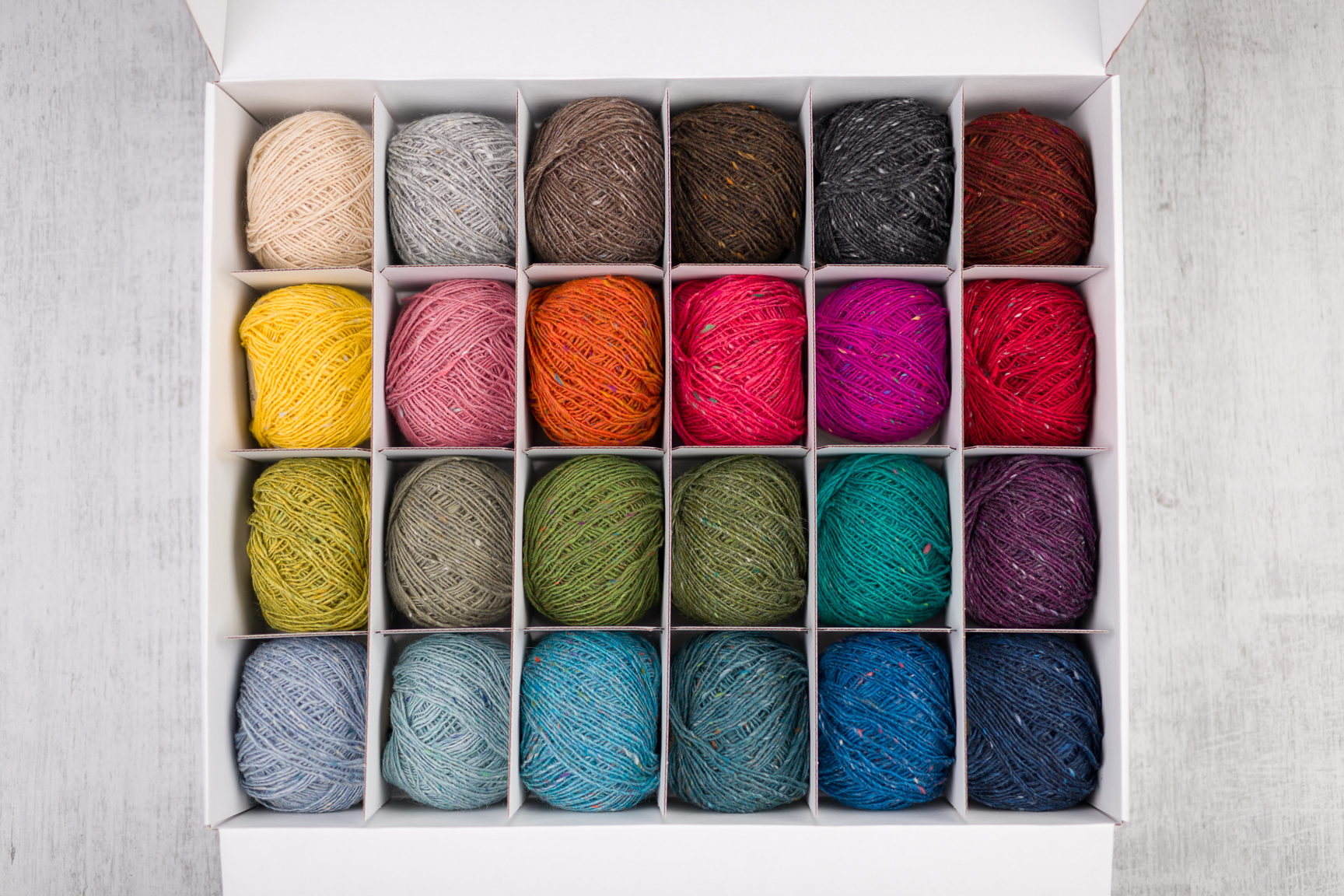
As these photographs will suggest, it was one of those incredibly busy sorts of days when there wasn’t an opportunity to make use of my camera — but these tasty balls of Felted Tweed may give you some indication of various things-in-process. All I’ll say right now is watch this space!

pine

Thankyou, Marie, David, Kate and the rest of the Rowan team for a wonderful introduction to the mill!

Follow

Get every new post delivered to your Inbox.

Join 3,958 other followers