Ode to my Socks

Image

 A comment from CinOz in response to the previous post pointed me towards this wonderful Pablo Neruda poem, which I thought you’d enjoy reading.

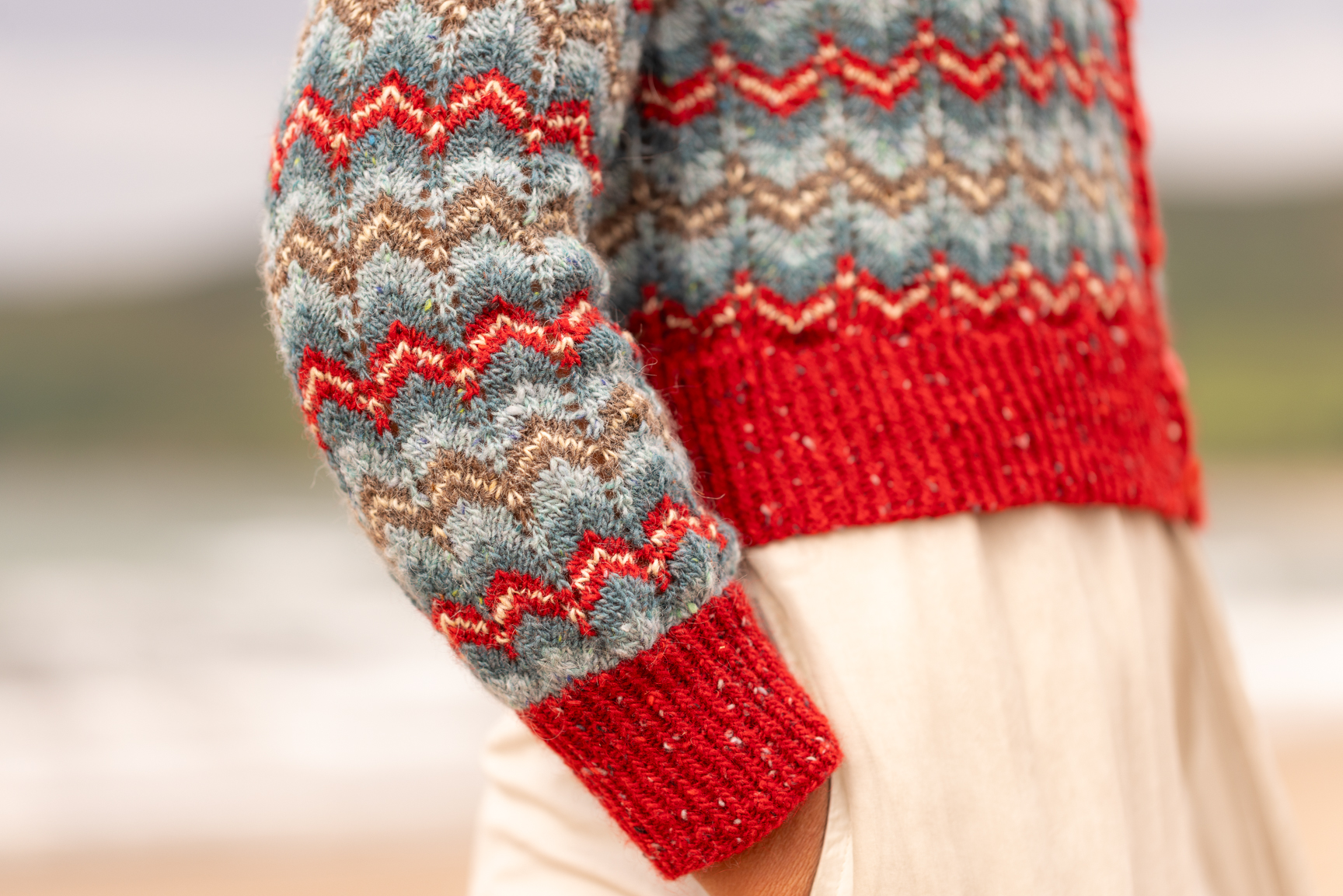
Ode to my Socks

Mara Mori brought me
a pair of socks
which she knitted herself
with her sheepherder’s hands,
two socks as soft as rabbits.
I slipped my feet into them
as if they were two cases
knitted with threads of twilight and goatskin,
Violent socks,
my feet were two fish made of wool,
two long sharks
sea blue, shot through
by one golden thread,
two immense blackbirds,
two cannons,
my feet were honored in this way
by these heavenly socks.
They were so handsome for the first time
my feet seemed to me unacceptable
like two decrepit firemen,
firemen unworthy of that woven fire,
of those glowing socks.

Nevertheless, I resisted the sharp temptation
to save them somewhere as schoolboys
keep fireflies,
as learned men collect
sacred texts,
I resisted the mad impulse to put them
in a golden cage and each day give them
birdseed and pieces of pink melon.
Like explorers in the jungle
who hand over the very rare green deer
to the spit and eat it with remorse,
I stretched out my feet and pulled on
the magnificent socks and then my shoes.

The moral of my ode is this:
beauty is twice beauty
and what is good is doubly good
when it is a matter of two socks
made of wool in winter.

Pablo Neruda. Trans. by Robert Bly.

Of Note

coopsox

I’ve been really inspired by some fantastic knitting books which have turned up here recently, so I thought I’d give them a shout-out. First up is Rachel Coopey‘s much anticipated first collection. Rachel is truly the Queen of Socks — she has a distinctive feel for pattern and structure which suits her foot-shaped canvas perfectly. Her designs are thoughtful, precise and definitively knitterly — she often reverses or mirrors stitch patterns across her socks in ways that are not only aesthetically pleasing but will really engage the maker’s interest through a pair. For example, Milfoil (the green pair that you can see above), has a horizontal mirror between cuff and foot that makes each sock the opposite of the other, while in Budleigh (my favourite design in the collection) neat cables and twisted stitches flow through the design with a vertical reflection that separates left from right.

budleigh

Inside the book are ten beautifully written and laid-out patterns; a technical section with instructions for essential sock-knitting techniques (including a useful illustrated afterthought heel-tutorial) and jolly English seaside photography. What’s not to love?

yoohoo

You can pre-order the book directly from Rachel here.

Next up, and top of the tree for pure knitterliness, is Lynne Barr’s new book, The Shape of Knitting. Lynne has an amazingly innovative approach to stitch, and I think she is one of the most creative and inventive designers around today.

lynn

My approach to design tends to be very referential. I see a thing, or read a thing, or hear a thing — I like the thing — and I want to somehow render, or celebrate, or get to the heart of the thing in stitches. Lynne’s approach is completely different, and I completely love it. She says:

Inspiration isn’t always derived from things we see around us — or even from words we read or hear. Sometimes it comes from something intangible within us. When playing with a technique, I sometimes feel like a dowser, but holding knitting needles instead of a dowsing rod to guide me toward an unknown goal.

I feel about two hundred years behind Lynne’s design-aesthetic — a plodding Wordsworth to her John Ashberry. Don’t get me wrong — I love the technical aspects of designing, and I like to make stitches do things for me, but I think that Lynne’s relationship to stitch is on another level entirely — like the listener of a symphony who has somehow become a sort of instrument themselves. If you have any interest in the creative possibilities of knitwear design, then you need to immediately get hold of a copy The Shape of Knitting to put on your shelf next to Lynne’s previous book.

Finally, here is a book I’ve been looking forward to seeing for some time.

rosa1

I admire Rosa Pomar for many reasons, but perhaps most for her thorough commitment to exploring and documenting the history of Portuguese textiles from the grass-roots up. Behind this wonderful book stands several years work, as Rosa has travelled around Portugal, researching animal husbandry, spinning, weaving, knitting, garment construction, and the traditional craft and design practices of men and women all over her beautiful country. Though my Portuguese is non-existent, I still find so much food for thought here.

rosa2

rosa3

rosa4

As well as exploring the history and distinctive techniques of Portuguese hand knitting, the book also includes patterns for twenty lovely accessories inspired by traditional design. I think that this one is my favourite . . .

bag

. . . not least for the way it showcases Rosa’s own Mirandesa yarn, which is hand spun and plied in Trás-os-Montes from the wool of Churra Galega Mirandesa sheep. This book marks an important landmark in the way the history of hand knitting is researched and written about, and you can buy it from Rosa here.

a kiss from France

akissfromfrance

I so enjoyed your translations and comments on this post, that I thought I’d continue the First World War theme with some of my favourite items in my postcard collection. Known to collectors generically as “silks”, these machine-embroidered cards first appeared around 1900, and were produced in vast quantities during the twentieth century’s first two decades. As an attractive and eminently portable form of sentimental greeting, these cards proved particular popular among British troops serving in France. Some estimates suggest that, in their wartime heyday, more than ten million were produced.

akissfromfrance2

Sources used to suggest that these cards were hand-embroidered, but this isn’t the case. Though particularly elaborate panel designs might involve finishing by hand, I have never seen one that didn’t feature machine embroidery. Using innovative Heilmann or Schiffli embroidery machines, a design could be repeated up to 400 times across large panels of organdy before being cut out, and individually assembled into framed and embossed cards. There were several factories in France and Switzerland where cards might be manufactured from start to finish, but some machine-embroiders also produced piece work from home, sending completed panels to be finished and assembled elsewhere.

The cards were usually sent in military mail pouches rather than being stamped and posted in the ‘open’ mail. Because they were protected in transit, the embroidered panels could be quite delicate in design. Many of the cards use the structure of the embroidery to create a tiny envelope:

envelope

Into which another card, with a personal greeting might be inserted.

souvenir

This is one of my personal favourites: the card would have been placed inside an envelope; the card is, itself, an envelope; and the embroidered panel also depicts an envelope-carrying bluebird.

Cards might be designed for specific occasions . . .

heartybirthdaygreetings

. . . or with specific addressees in mind . . .

dearmother

While many of the designs are conventional (though nonetheless appealing) others feel perhaps more modern and innovative.

goodwishes

and while theres a tremendous variety of embroidered designs, the same might be said of the paper-embossing, which on some cards is more elaborate than the stitching.

embossing

These cards carry human stories.

reg

And there’s a particular kind of confluence between these stories and the stitches through which they are conveyed.

bouquet

Here is one of my favourites: it is a scene unmistakably French with trees and tiny church; ploughed field and red earth . . .

scene

. . . flowers bloom at the field margin . . .

blooms

. . . framing a message of poignant reassurance.

weareallright

The roses hide. . .

rose

. . .an envelope . .

lightshow

. . . containing a message.

message

It is a simple, mass-produced, material object.

weareallright2

It is also a massive conveyer of meaning.

New Lanark, the egg, and the naming of things

hiya

Hiya! It is I, Bruce. Today I am here to tell you about the place called New Lanark.

newlanark

Tom and Kate have been to this place many times, and are fond of it for many reasons. Kate particularly likes New Lanark because
1) it is the birthplace of Utopian Socialism and
2) it makes yarn.

yarn

As well as being an important World Heritage Site, New Lanark is a place where you can enjoy the spectacular scenery of the Falls of Clyde.

fallsofclyde

This was definitely the bit that interested me.

followme

Up along the river banks and woods, there is much fun walking to be had. I smelt many interesting smells and went for a swim . . .

retrieval

. . .I looked after the humans, hurrying them along the paths, and posing obligingly for photographs.

wazznbruce

. . . I also heard some sounds that were new to me. For example, these icicles on the opposite bank made an interesting crrrrrrack and crrrrrash sound as they broke and fell into the river.

icicles

Then we came to a place called The Hide.

hide

There was much excitement around The Hide because The Egg had just appeared in the nest of a Peregrine. The humans at The Hide had equipment through which Tom and Kate could look and see the Peregrine sitting on The Egg. Kate seemed quite interested in The Egg, but was perhaps even more animated by the colour of the Peregrine’s eyelids, which were apparently a very very very bright yellow. I was not allowed to look through the equipment, but I was very good on my lead and did not snaffle any of the Hide humans’ tasty meat-filled sandwiches while they were being distracted by the excitement of The Egg.

confusion

Now, I know and understand many human words — egg and chicken, for example, are two words that make a lot of sense to me. But two words that do not make sense are the words called Monkey Walking, which is what the humans shout at me with glee when I do this on a path with gaps in it:

monkeywalking

The naming of things is perhaps the deepest of all human mysteries. For example, why is this crunchy, tasteless, pointless thing called Lichen when there is nothing to like about it at all?

lichen

Why is this piece of Scottish hydroelectrical equipment called YORKSHIRE?

yorkshire

Who named this bench BROWN LONG EARED BAT?

brownlongearedbat

And which daft human decided that this fence should be called DONKEY?

donkey

Answers on a postcard, please . . .

seeya

See you soon, Love Bruce

Kate adds: A shout-out to Laura, the New Lanark ranger, who reads this blog and who we met on our walk today. Thanks so much to Laura and all her colleagues for their hard work maintaining this wonderful landscape for everyone to walk in and enjoy! xx

Jim’s running (and knitting) for Refuge

VeufTricot

Who is this man? Well, some of you may know him as Veuf Tricot, author of the scabrous and witty column in UK magazine Simply Knitting. But I know him as Jim, husband of my good friend and colleague Jen. As well as being a teacher, writer, and all-round good egg, Jim is currently in training to run his first marathon in London on April 21st in support of Refuge — a UK charity which supports women and children who are victims of domestic violence. Not content with predictable methods of seeking sponsorship through through direct donations, Jim whipped out his needles and yarn and got to work to raise some cash. With the assistance of three great independent yarn dyers and, of course, the inimitable Jen, Jim has created a collection of three marathon-themed accessories, with all sales going towards his fundraising efforts. I recently caught up with Jim to hear more about the project.

Tell us about your three designs, and the inspiration behind them. 

It started off with an email from Sarah at Babylonglegs offering to do a special colourway to help with my fundraising efforts. We then both wondered about doing a pattern as well. This was on a weekend when I spent a lot of time waiting at traffic lights driving up to Manchester. I can’t imagine where the colour choices came from! . . .

ready2(The Ready Mitts will keep your hands warm during Winter training, and are knitted up in Fyberspates MCN sport)

. . .The choice of accessories was quite straightforward. Fingerless gloves are a must for winter running, so they are as much practical as decorative. Similarly, the hat had to serve the purpose of having a thicker brim than crown to keep my Prince Charles ears warm without running the risk of overheating. I also had visions of knitters cheering me along the marathon route in London swinging their scarves around their heads like continental football fans as I serenely loped past.

steady1
(Jim’s ears are cosy in his Steady hat, knitted up in in Skein Queen’s beautifully rich and vibrant Saffron ‘Desire’ yarn)


This is your first marathon. What has been the most challenging aspect of the training?


The training itself is generally fine. It’s the worrying when I miss a session due to work, injury, illness, or simple exhaustion that’s the hard part. My real fear is that I won’t be sufficiently prepared. That and getting up on a Sunday morning to leave the comfort of a warm bed to pound the streets in the pouring rain.


Can you turn a heel?

I’ve turned my ankle on many occasions and turned stomachs, but I don’t think I’ve ever turned heads and never a heel.


ready1

Some adventurous marathon runners, like Susie Hewer, have found ways to knit and run simultaneously. Will you be attempting to combine these two activities?

No. I can’t do more than one thing at once. Before Christmas, I couldn’t run and look where I was going at the same time, so I found myself landing face-first onto the pavement. In my defence, it was dark and the recycling box I’d tripped over was black.


Veuf Tricot had a lot to say about the penchant for pompoms this past Winter. What is your knitting-trend forecast for the Spring? 


Cabled onesies inspired by Aran jumpers. Infantile, but traditional.


You have documented Jen’s focused obsession with all things teal-hued . . . but is there a particular shade of yarn that floats your boat? 


My appreciation of all things knitted for me is well documented. I don’t think there’s a particular single colour that I must have absolutely everything in. Having said that, I do like my green Fyberspates Gloucester Tweed socks and the Skein Queen Steady Saffron for the Steady Hat in particular.


steady2

Veuf Tricot documents the world of knitting with a certain amused detachment .  . . and yet you are a knitter and designer yourself, who is completely implicated in that world. What I am saying is that despite your occasionally scabrous remarks you clearly love knitting really. What’s your response? 


I am a knitter and designer, not a Knitter and Designer. While I’ve been satisfied with the outcomes thus far, I’ve no great affection for knitting itself. My being part of Knitterworld is probably more about my marriage than for knitting. I think that the columns I’ve done for Simply Knitting are a kind of alternative to love letters or poetry, neither of which are really me. Despite my antipathy towards Knitting, I still pay attention, take it all in and support her in her incoherent gibbering.

go1
(Jen will be supporting Jim wearing her Go! scarf, knitted up in Babylonglegs ‘semi-precious’ in a specially-dyed colourway)


Finally, tell us why you are running for Refuge?

Domestic violence is more prevalent within our society than most people realise. It’s not something you often see out in public, but something you learn about long afterwards. We have friends who have suffered domestic violence, or lived in fear of violence, and we simply haven’t known about it until much later on. Refuge work with mostly women and children to help them to escape from their abusive relationships and move on. Some funding for the services provided by Refuge comes from the public purse, but with budgets being cut, fundraising is becoming ever more important. I could have set up a monthly direct debit and been a supporter of the charity, but felt that I could do more.
The second reason is that Refuge has become a family charity. Both my sister and one of my brothers have run the London Marathon to raise awareness of Refuge and my sister-in-law has worked for them. Last summer there was a bit of an awkward family dinner with fingers pointed at both me and my other brother with cries of, “Who’s next?”
Of course, the main reason is that I have tried to escape from having to model for Jen’s blog. Unfortunately, it has all gone a bit wrong as I’ve had to model my own designs. Still, it will be worth it if I hit my fundraising target.

Thankyou, Jim!

Running a marathon is no small feat — living with another runner I know what a gargantuan emotional and physical effort the training takes and what a massive achievement it is to run that distance on the day. Jim’s fundraising target is £2,000. He has currently raised just over half that sum. Please support him and Refuge by purchasing the Ready, Steady, Go! ebook via Ravelry. For just five pounds you’ll receive three great patterns and help him reach his goal. If you prefer to make a direct donation, you can do so here.

go2

Refuge help run the National Domestic Violence Hotline: 08082000247. Call if you are worried yourself or about someone you know.

images of knitting #1

I have a small (but ever growing) collection of prints and postcard in which knitters, and the activity of knitting, are represented. Some of these are really very interesting, and I thought I’d occasionally share them with you here.

postcardfront

This card, which was posted with an Austrian stamp in 1916, depicts a ‘continental’ knitter working on a long stocking, whilst literally being haunted by thoughts of war. It is undoubtedly a sentimental image: like equivalent representations of industrious female knitters in Britain and America during the First World War, the needles seem to be there to enable this woman to be ‘doing something useful’ for the war effort, producing functional objects that also serve as testimony of her affection. The woman’s face is the very image of serene meditation — her surroundings are quietly and comfortably domestic; but the ghost of the war hangs over her pleasant home in the shape of the uniformed figure by the window. Is this half-present soldier conjured up by the act of knitting itself, as the repetitive action of the needles frees the knitter’s mind to wander among her thoughts and memories? Is knitting, therefore, a soothing activity that allows this woman to be comforted in her solitude by the idea that she is creating something equally comforting for her absent beloved? Or is the transparent figure an actual ghost — the soldier who has returned after death to haunt his faithful partner? If so, then knitting is an activity that transforms the woman into a tragic figure: an image of steadfast affection and domestic industry, steadily turning out socks for a man already dead.

I find this image interesting because it is troubling and because it disturbs those gung-ho ‘knit your bit’ stereotypes that are generally associated with the 1914-18 war effort. The way that the solider’s ghostly presence brings the war into the woman’s domestic environment is deeply suggestive, and the whole image is, in its own way, as unhinged as the narrator of Philadelphia Robertson’s poem, A Woman’s Prayer (1916), who knits on the edge of sanity:

“I am so placid as I sit
In train or tram and knit and knit;

Within the house I give due heed
To every duty, each one’s need,

Sometimes the newsboys hurry by,
And then my needles seem to fly

And when the house has grown quite still
I lean out on my window sill —

And pray to God to see to it
That I keep sane enough to knit”

I’ve scanned the reverse of the postcard, just in case any of you can decipher it.

postcardback

Ursulas

I always find it exciting when different iterations of my patterns are posted on Ravelry. This is particularly the case when knitters’ colour choices and personal modifications really transform the look of a design. Some amazing Ursulas have begun to appear which, because they have a completely different feel to my original, and also because they just look bloody lovely, I wanted to share with you.

Ursula was inspired by the shades of Shetland’s summer wildflowers, and the original had a pale, botanical palette.

ursula9

But Sarah knitted her Ursula with natural and sky-blue shades set against a background of midnight blue — creating a garment with a totally different feel.

sarah2

Sarah says: “I am completely in love with my Ursula. This was an awesome project from the very beginning, using one of my favourite yarns from JC Rennie and my own handspun. . .

sarah1

“Apart from completely changing the colours, I didn’t make any changes to the pattern, but accidentally knit the body at the narrowest point of my waist a little tighter, which gave me perfect and unintentional subtle waist shaping. It was the first time I’d tried a crochet steek (using the directions in Colours of Shetland) and it was joyous! I haven’t done a steek any other way since. I knit Ursula mostly on holiday, so its a lovely reminder of my trip too. I’m sure I’ll make it again in similar colours to Kate’s original, as the fit is absolutely perfect and it was so fun to make.”

sarah3

I particularly love the fact that three different breeds of British sheep are represented in this garment (Sarah spun the fawn shade from Masham fibre, the brown from Manx Loaghtan and the vivid blue from Jamieson and Smith Shetland tops). Her Ursula is ravelled here.

Next up is Georgie, who chose to knit her Ursula with a single contrast shade, rather than three.

georgie1

Georgie says: “My modifications were mainly due to yarn constraints, as I’ve been having to be thrifty, unravelling cardigans I no longer wear. I had already knit a cardigan in the three shades I used for Ursula (Marie Wallin’s Mika) a lovely cardigan I never really wore, mainly due to the style, I prefer a more classic shape for cardigans. Anyway, Mika was first in line when I was scouting around the house for suitable yarn for Ursula. . .

georgie3
. . . It’s knit in a combination of Jamieson’s Shetland Spindrift (the green), then Blacker Yarns Alpaca/Shetland in cream for the body and grey for the sleeves. I could see while knitting that I wouldn’t have enough of the main colour to finish the cardigan as written, so I shortened the body so the ribbing started on my waist. The sleeves were also shortened due to my yarn levels, plus, I thought they would work best with the length of cardigan.”

georgie2

I was blown away when I saw Georgie’s Ursula how her use of a single contrast shade totally transformed the feel and look of the stitch pattern: in her cardigan, the zigzagging tri-coloured stripes of my original have become an allover with its own integral structure and continuity. I also really like how the cropped body and three quarter sleeves lend the garment an incredibly neat, vintage look. Georgie’s Ursula is ravelled here.

Finally, here is Rebecca’s Ursula, knit in four lovely shades of Jamieson and Smith jumper weight: 203, 118, fc14 and fc41.

rebecca1

Of her modifications, Rebecca says: “I lengthened the body by simply adding an extra peerie repeat in green before beginning the armhole steeks. I also made the sleeves snugger by decreasing very quickly and then lengthened them a bit to come further over the hands.”

rebecca3

Rebecca’s contrast shades really pop out against the grey background, and this garment feels to me like a refreshing change of key. I love the way that the colours she chose speak to one another, and find the juxtaposition of the complex plum tones of fc14 against the solid Spring green of 118 particularly pleasing. Rebecca’s Ursula is ravelled here.

rebecca2

Ursula is one of my favourite designs in Colours of Shetland, and it makes me so happy to see knitters making it, transforming it, and enjoying wearing their own beautiful hand-knitted cardigans!

Follow

Get every new post delivered to your Inbox.

Join 3,951 other followers