a nice cup of tea

Your comments on the last post have really got me thinking about many tea-related issues. . . Not least among these is the way that, unlike so many other British and Irish products, where tea is concerned brand loyalty is still strongly bound up with a sense of place. As the disturbing quantity of tea and tea-related kitchen wares might suggest above, I am a foolish devotee of Yorkshire Tea; Barry’s is apparently a Cork thing, in Belfast they like Nambarrie, in Newcastle, Ringtons. In Cumbria, you can still find Farrer’s “Lakeland Tea,” (delicious) Botham’s of Whitby makes “Resolution Tea” (also very good) and down the road in Musselburgh they blend Brodie’s “Famous Edinburgh Tea” which shamefully, despite almost a decade in this city, I’ve never tried. None of these teas are remotely fancy: they are ordinary everyday teas, all are available in convenient bag form; most seem to be tannin-rich, strong Indian blends; and all are, as I say, deeply associated with region. Without knowing much about this, I imagine these ‘regional’ branded teas must have begun to emerge when importers, merchants and blenders might also have had a chain of local shops and tea rooms, and began to market their own products – perhaps at the turn of the twentieth century. I think I now need to read much more about this. In the meantime, I realise that my local tea knowledge has a distinctly Northern flavour, so I would be really very grateful if those of you in the West Country, Wales, East Anglia, the Midlands, London and the South East could let me know of any existing regional teas that inspire brand loyalty among local communities in a similar manner to Barry’s, or to Yorkshire Tea. I shall then do a little research, and prepare a post, with a compendium of regional teas.

And just in case you were in any doubt at all that I LIKE TEA – bear in mind that this heartening image is the first thing I see when I open my eyes every morning. A good incentive to get up and put the kettle on.

It also occurred to me that many of you might be unaware of one of my favourite tea-related texts: George Orwell’s essay, “A Nice Cup of Tea”, which he published in the Evening Standard in 1946, and which I reproduce here for your amusement / edification. I love so many things about this essay – particularly the assumption that “a nice cup of tea” should make one feel “wiser, braver, and more optimistic.”At the height of rationing, “six teaspoons per pot” seems a bit excessive, and as Tom (or any other scientist) would tell you, the milk should definitely go in first so that it warms up slowly, and its proteins are not denatured. Otherwise, I find myself in general agreement with the remaining ten of Orwell’s “golden rules.”


(Orwell with a Nice Cup of Tea)

A Nice Cup of Tea

If you look up ‘tea’ in the first cookery book that comes to hand you will probably find that it is unmentioned; or at most you will find a few lines of sketchy instructions which give no ruling on several of the most important points.

This is curious, not only because tea is one of the mainstays of civilisation in this country, as well as in Eire, Australia and New Zealand, but because the best manner of making it is the subject of violent disputes.

When I look through my own recipe for the perfect cup of tea, I find no fewer than eleven outstanding points. On perhaps two of them there would be pretty general agreement, but at least four others are acutely controversial. Here are my own eleven rules, every one of which I regard as golden:

First of all, one should use Indian or Ceylonese tea. China tea has virtues which are not to be despised nowadays — it is economical, and one can drink it without milk — but there is not much stimulation in it. One does not feel wiser, braver or more optimistic after drinking it. Anyone who has used that comforting phrase ‘a nice cup of tea’ invariably means Indian tea.

Secondly, tea should be made in small quantities — that is, in a teapot. Tea out of an urn is always tasteless, while army tea, made in a cauldron, tastes of grease and whitewash. The teapot should be made of china or earthenware. Silver or Britanniaware teapots produce inferior tea and enamel pots are worse; though curiously enough a pewter teapot (a rarity nowadays) is not so bad.

Thirdly, the pot should be warmed beforehand. This is better done by placing it on the hob than by the usual method of swilling it out with hot water.

Fourthly, the tea should be strong. For a pot holding a quart, if you are going to fill it nearly to the brim, six heaped teaspoons would be about right. In a time of rationing, this is not an idea that can be realized on every day of the week, but I maintain that one strong cup of tea is better than twenty weak ones. All true tea lovers not only like their tea strong, but like it a little stronger with each year that passes — a fact which is recognized in the extra ration issued to old-age pensioners.

Fifthly, the tea should be put straight into the pot. No strainers, muslin bags or other devices to imprison the tea. In some countries teapots are fitted with little dangling baskets under the spout to catch the stray leaves, which are supposed to be harmful. Actually one can swallow tea-leaves in considerable quantities without ill effect, and if the tea is not loose in the pot it never infuses properly.

Sixthly, one should take the teapot to the kettle and not the other way about. The water should be actually boiling at the moment of impact, which means that one should keep it on the flame while one pours. Some people add that one should only use water that has been freshly brought to the boil, but I have never noticed that it makes any difference.

Seventhly, after making the tea, one should stir it, or better, give the pot a good shake, afterwards allowing the leaves to settle.

Eighthly, one should drink out of a good breakfast cup — that is, the cylindrical type of cup, not the flat, shallow type. The breakfast cup holds more, and with the other kind one’s tea is always half cold before one has well started on it.

Ninthly, one should pour the cream off the milk before using it for tea. Milk that is too creamy always gives tea a sickly taste.

Tenthly, one should pour tea into the cup first. This is one of the most controversial points of all; indeed in every family in Britain there are probably two schools of thought on the subject. The milk-first school can bring forward some fairly strong arguments, but I maintain that my own argument is unanswerable. This is that, by putting the tea in first and stirring as one pours, one can exactly regulate the amount of milk whereas one is liable to put in too much milk if one does it the other way round.

Lastly, tea — unless one is drinking it in the Russian style — should be drunk without sugar. I know very well that I am in a minority here. But still, how can you call yourself a true tea-lover if you destroy the flavour of your tea by putting sugar in it? It would be equally reasonable to put in pepper or salt. Tea is meant to be bitter, just as beer is meant to be bitter. If you sweeten it, you are no longer tasting the tea, you are merely tasting the sugar; you could make a very similar drink by dissolving sugar in plain hot water.

Some people would answer that they don’t like tea in itself, that they only drink it in order to be warmed and stimulated, and they need sugar to take the taste away. To those misguided people I would say: Try drinking tea without sugar for, say, a fortnight and it is very unlikely that you will ever want to ruin your tea by sweetening it again.

These are not the only controversial points to arise in connection with tea drinking, but they are sufficient to show how subtilised the whole business has become. There is also the mysterious social etiquette surrounding the teapot (why is it considered vulgar to drink out of your saucer, for instance?) and much might be written about the subsidiary uses of tealeaves, such as telling fortunes, predicting the arrival of visitors, feeding rabbits, healing burns and sweeping the carpet. It is worth paying attention to such details as warming the pot and using water that is really boiling, so as to make quite sure of wringing out of one’s ration the twenty good, strong cups of that two ounces, properly handled, ought to represent.

First published in The Evening Standard, January 12th, 1946

experiment

Like me, my friends in Ireland like their TEA. The two most popular Irish brands are Lyons and Barry’s – and loyalties are hotly divided over the two brands. Certainly, everyone in Ireland I’ve spoken to about tea knows which they prefer. I am a person of strong opinion where tea is concerned, so Eimear recently sent me both brands so that I could make up my mind . . .

So, on the left, we have a pyramid-shaped Lyons teabag, and on the right, a more traditional rectangular Barry’s teabag . . .


The packaging of both brands is actually weirdly similar . . .


Lyons . . .


Barry’s . . .


Lyons . . .


Barry’s . . .

I took a good slurp of both and decided that the winner is most definitely . . .


BARRY’S

I found the taste of the Lyons strangely familiar – the shape of the tea-bag, and the fact that it is distributed by UniLever leads me to wonder whether it is, in fact, essentially the same tea as PG Tips?

I do not know whether Barry’s has a UK brand equivalent – it did not taste familiar, and I have tasted many, many teas. To me it seemed a good afternoon tea – “brisk”, as it says on the packaging – and I’m definitely looking forward to drinking my way through the rest of the box. Mmmmm. . . tea . . .

You will note that was nothing objective at all about this experiment: a blind tasting is pretty much impossible to conduct solo; there was no control; I had my suspicions that the pyramid-shaped bag contained PG Tips before I tasted it; and perhaps, too, I am drawn to Barry’s because I find the name vaguely amusing (Barry (as in Barry-The-Tramp) is the shorthand in this house for a stubbly face that needs a shave). Anyway, I hope I’ve not offended any Irish readers in the Lyons camp!

And while we are on the subject of experiments, I want to say a big CONGRATULATIONS to Tom, aka Barry, whose important new work on B-cells and MS is currently climbing up the immunology charts as the “most read” paper in the Journal of Experimental Medicine. WHOOT!

this weekend has mostly involved . . .

Tricycling around Crammond. I’m getting quite adept on the trike now, but zipping about is still exciting. Zoom!

Knitting a gigantic swatch. It is now over two feet long and counting. At some point I will settle on something – but in the meantime, I’m finding garter stitch very addictive.

Look! Bruce can fly!

At the Woolshed

The other stop on our whirlwind North East tour was the Woolshed. I’ve been corresponding with Anne and Barbara for a while now, and it was lovely to finally meet them. Barbara has been designing and working with wool for many years, and I find her very inspirational.


(I-cord rams on the back of Barbara’s Weskit)

Mel fell in love with Barbara’s Lonach design, which is knitted in Albayarn . . .


(cooee! Mel!)

But, being fond of all things fishy, my favourite of Barbara’s patterns has to be her Herring Girl Wrap, which she designed after her involvement with the Moray Firth Gansey Project. The shawl is made modularly: different squares showcase different gansey patterns, and the whole thing is joined with herringbone stitch. It is knitted in Flying Flock DK – a yarn exclusive to the Woolshed, and another of Barbara’s projects.

Why Flying Flock? Well, the Scottish Wildlife Trust manage an innovative flock of sheep who ‘fly’ about Fife, and through conservation grazing, help to maintain the area’s grassland. (The flock, and their shepherdess, Laura, have their own blog here)

Barbara arranged for the Flying Flock’s clip – a mixture of Shetland and Hebridean – to be scoured, processed and spun up at New Lanark.

The end result is a wonderfully sheepy DK which knits up into a lovely fabric, rather softer than one might imagine. A great project, and a great Scottish yarn!

Actually, the Woolshed is stuffed full with great Scottish yarns – Shilasdair, New Lanark, Grampian Alpacas . . . and my favourite Albayarn, of course.


(mmm … tasty Albayarn)

The Woolshed is my favourite kind of yarn store. My only regret is that I don’t live close enough to make it my local!

Thanks for the tour and a great cup of tea, Anne and Barbara!

After admiring the Herring Girl Wrap, our whole trip turned out to have an appropriately fishy theme. We enjoyed some delicious salmon at Gadies (next door to the Woolshed, and which I’d definitely recommend), a tasty fish supper at the Mintlaw chipper . . .and we then felt compelled to seek out the best possible kind of Scottish fare on our way back home to Edinburgh.

SMOKIES! Yum!

Rennies

Down a pretty country lane . . .

. . . there sits an eighteenth-century mill.

The mill has been in operation for many, many years.

. . . and behind the blue door . . .

They are making YARN!


The particularly bright yellow that was being spun that day seemed to perfectly match the colour of the Milladen fields outside.

This mill, of course is J.C. Rennie &Co, which Mel and I were lucky to visit last week on a trip up to the North-East.

For many years, I have had a thing about Rennie & Co’s Shetland, which is one of my very favourite yarns to work with. There are several distinctive things about it: it is a little finer than many fingering weight Shetlands, has a light soft hand, and is incredibly even and well spun (having witnessed a very efficient blending and spinning process from start to finish I can now see why this is). To me at least, Rennie & Co’s yarns have become instantly recognisable. The company largely work with trade: their hand-knitting yarn is branded by other businesses, and they also spin for many different weavers, machine knitters, designers, and clothing manufacturers. Even if you think that you have never knit with their yarn, I am sure that, in one form or another, most of you will have come across it without knowing it. To give just three examples: you will find it in sweaters sold by a UK clothing brand whose name suggests grilled bread; you will find it in the furnishing fabric lines of a well-known US brand whose name sounds like an academic discipline, as well as in the knitting kits of a popular Danish designer who likes her garter stitch. Over the past five years, as my fondness for knitting and woolly textiles has grown into an obsession, I cannot count the number of occasions that I have wondered “is that Rennies?” This recognisability is partly, as I say, about the yarn’s hand and spinning quality, but is also most definitely about the colours.

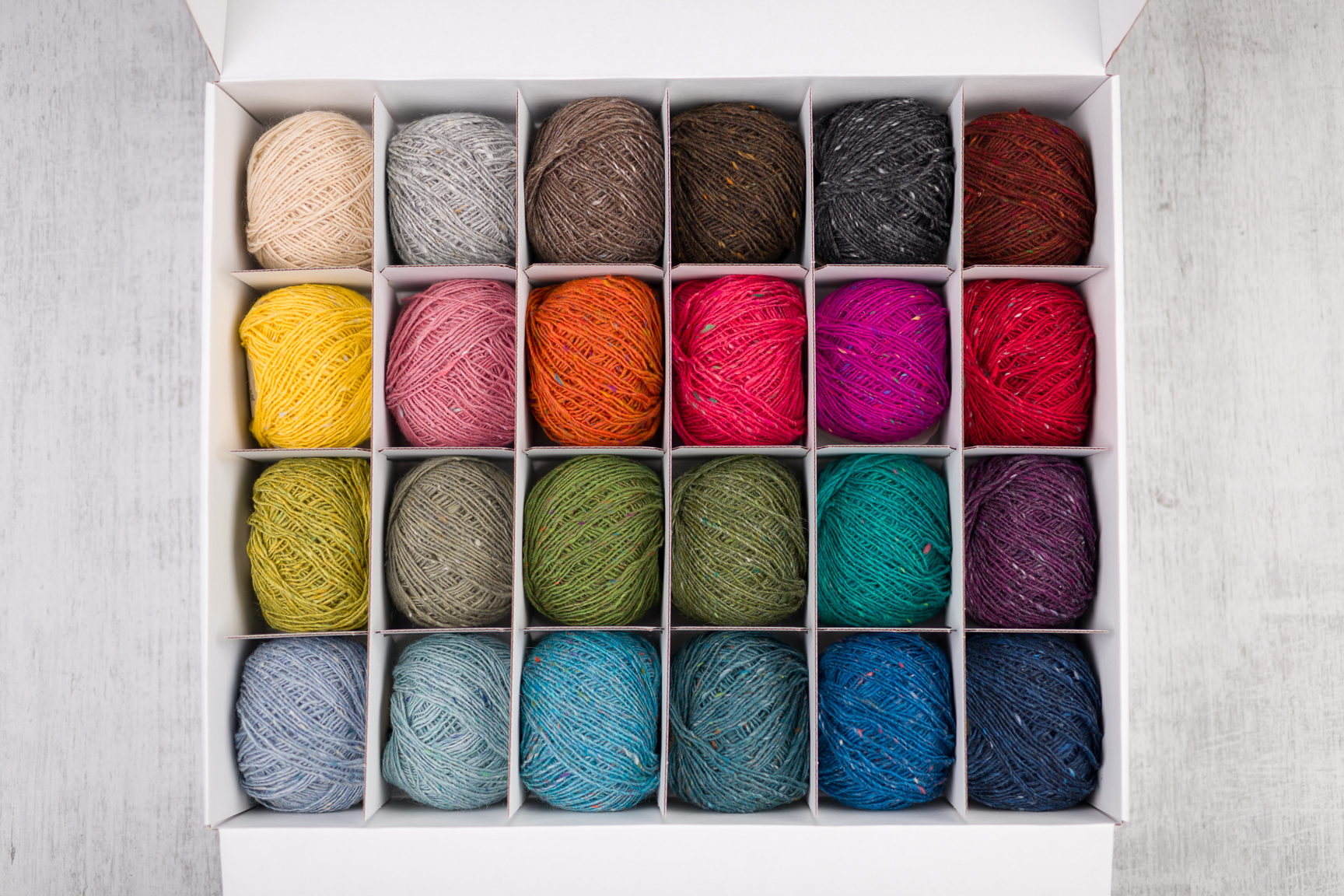
Rennie & Co’s palette is beautifully rich and varied. The recipe for each blended colourway can be wonderfully complex.


Mel and I were in raptures, as you can imagine, and, after a fascinating tour of the mill, spent a long time happily squooshing beautifully coloured yarns and fabrics.

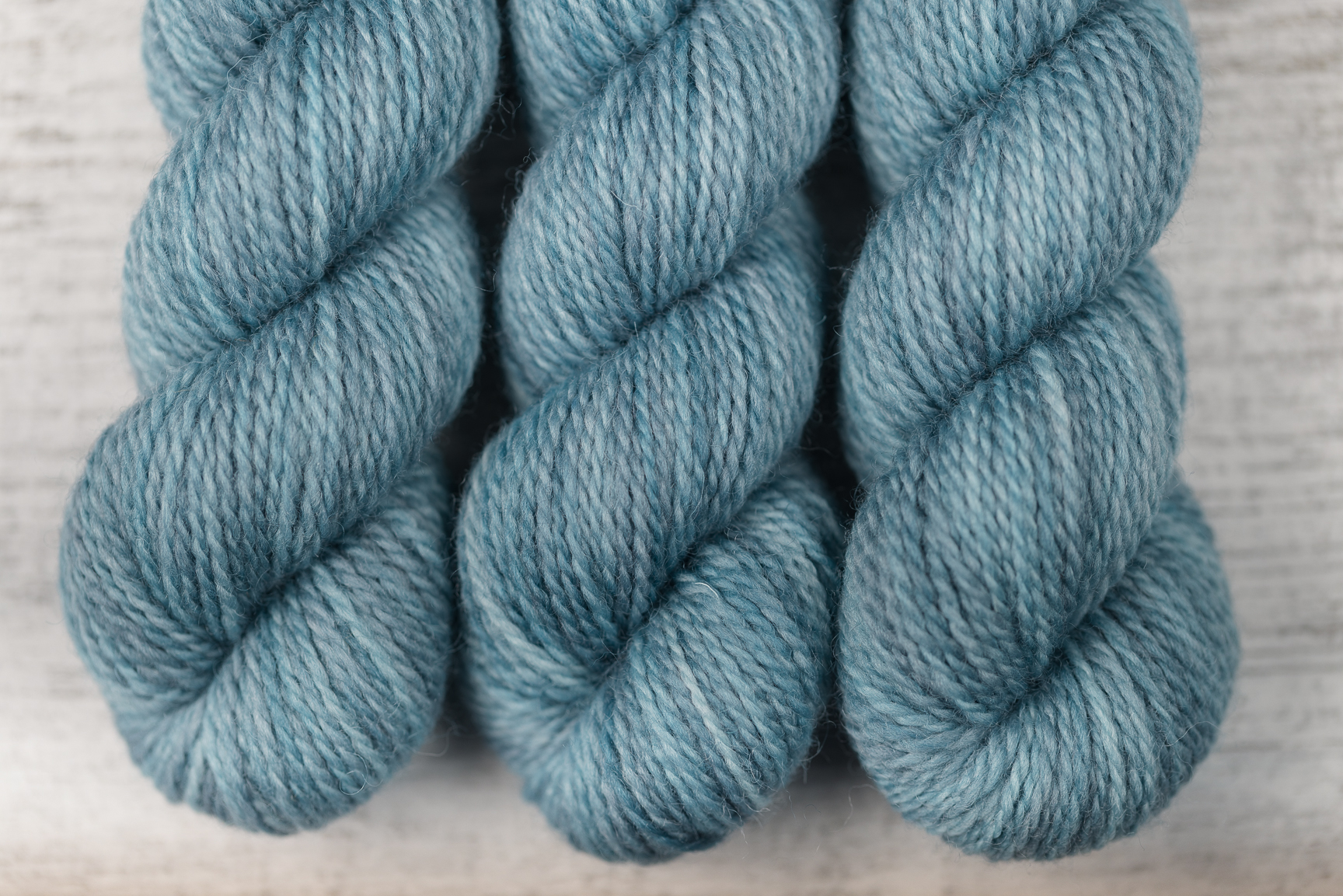
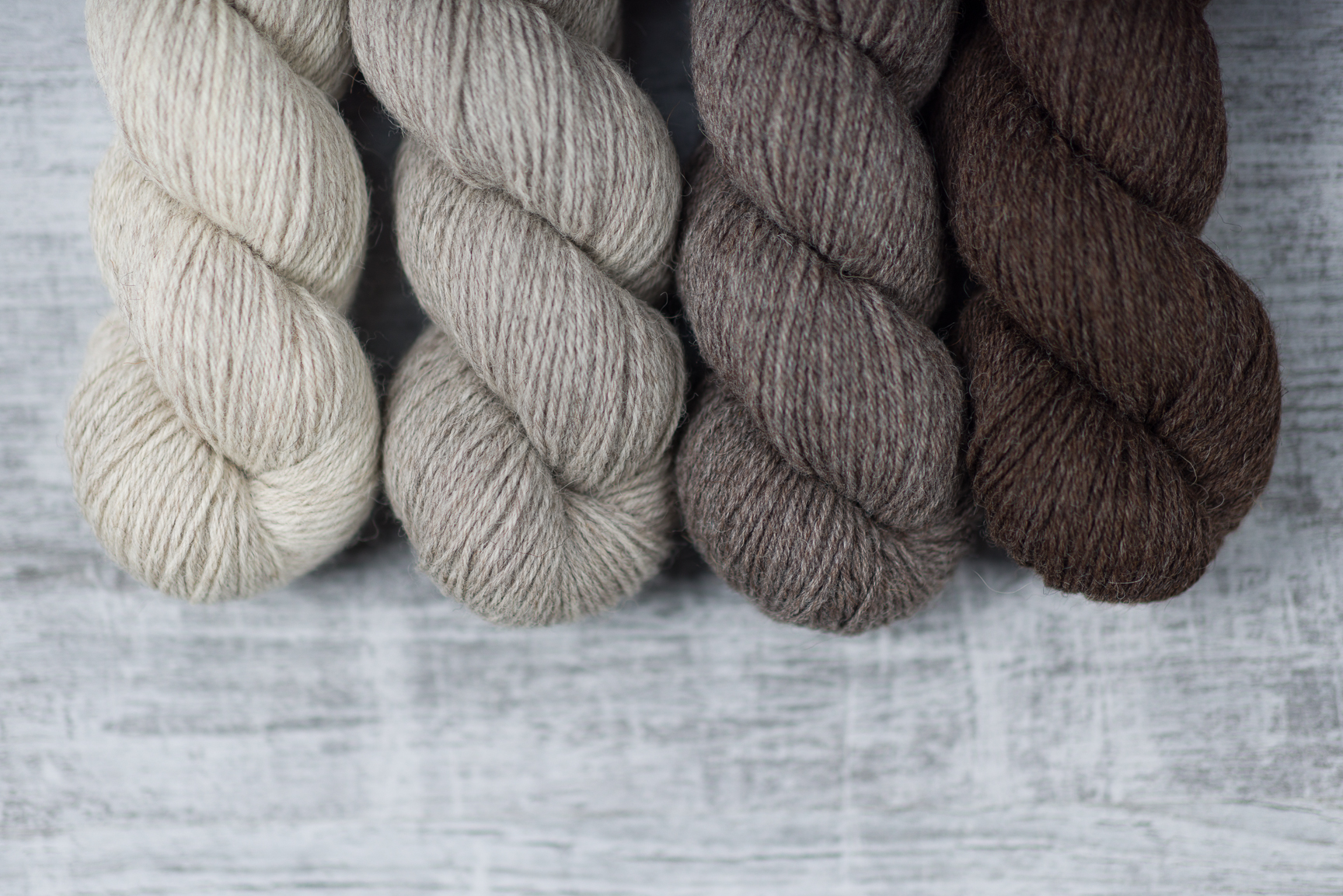
The gorgeous colours of Rennie & Co are of particular interest to me at the moment because it was of course, their Albayarn, which is distributed by my friends at the wonderful Woolshed (of whom more in the next post), that I used to knit my Betty Mouat Cowl and Betty Mouat sweater.

So, all being well, I should have some Albayarn kits to show to you at Woolfest!

Thanks so much, Christian and Marian, for a grand day out at the mill!

60 North

Just dropping in quickly to say that the new issue of 60 North is out! What? You’ve never heard of 60 North? The name refers, of course, to Shetland’s line of latitude, and is a really well-produced magazine put out by my friends at Promote Shetland. Features in the magazine explore many different aspects of Shetland’s landscape, archeology, wildlife, and culture – including (of particular interest to me) – a piece on Shetland Wool Week, and a great article exploring the fine local tradition of Sunday Tea. Also, you may remember that last Summer I published a feature exploring the history of Shetland Lace with Rowan. I know that those of you who are not in the UK sometimes find it difficult to get hold of the Rowan Magazine, so we have now re-published this piece in 60 North, where everyone can see it. Yes, that’s right: 60 North is available online and it is completely free! Stick the kettle on and and download yourself a copy!

Bláithín (junior)

So, here is Bláithín (junior)! This is the kind of cute child’s garment that makes me want to intone “almost too wee” in the manner of Whisky and Brandy Bolland examining Prince’s wardrobe (about a minute into the clip). (Ahem).

Bláithín (junior) comes in sizes from 12 months to 9 years, and has many of the same design elements as the adult cardigan – but obviously on a much smaller scale. For that reason, it would be an ideal project for a beginner to try out some of the techniques I discussed in my steek tutorials, before taking the plunge and steeking an adult-sized sweater.

Just like the adult cardigan, the junior version features i-cord buttonholes . . .

. . .steek sandwich facings . . .

. . . and neat little inset pockets. . .

The yoke features the same floral design as the adult version, but is simpler and shallower.

This sample was expertly test knitted by Eimear Earley, who you may remember as the designer of the shawl pin I mentioned in this post. Thanks, Eimear!

And, like the adult pattern, the junior version was tech-edited by brilliant Jen Arnall Culliford.

So, if you know a small person who would like their very own wee Bláithín, the pattern is now available here or here

I’ll also shortly have print versions of both Bláithín patterns ready for my yarn-store stockists.

I’ve been working on these designs for a couple of months now and am really pleased with them – it is great to get them out of my head and into the world! And, intrusive health-issues notwithstanding, I am enjoying designing tremendously at the moment. I think I can now mention that I am now working on a collection of new designs (yes, an actual book) that should be out by the end of the year. I’ll tell you more about this as time goes on. . .